Few destinations offer such a dramatic change of scenery within a single vacation as Egypt. In the morning, you can swim in the turquoise waters of the Red Sea. A few hours later, you can be surrounded by mountains and desert landscapes. On another day, you can stand beneath enormous ancient columns, walk beside hieroglyph-covered walls and explore monuments that have survived for thousands of years.
This extraordinary variety is one of the reasons an Egypt vacation can feel like several different journeys combined into one.
Egypt is often associated with pyramids and pharaohs, but the country is much more diverse than its ancient monuments. It is a destination where the sea, desert, river, cities and archaeological sites exist relatively close together. Travelers can combine Red Sea activities, desert adventures, historical sightseeing, city exploration and peaceful beach days without necessarily changing countries or even their main holiday base.
For visitors staying in Hurghada, this diversity is particularly easy to experience. The city provides access to the Red Sea while also offering opportunities for desert excursions and longer trips toward some of Egypt’s most important historical destinations.
This article explores why Egypt feels so diverse, how different experiences can be combined, and how to create realistic 5-day, 7-day and 10-day Egypt itineraries.
Egypt Is More Than Pyramids and Beaches
When people imagine Egypt, two images often come to mind.
The first is the ancient world: pyramids, temples, pharaohs, hieroglyphs and monumental statues.
The second is the Red Sea: beaches, sunshine, turquoise water, colorful coral reefs and resort hotels.
Both images are accurate, but neither tells the whole story.
Between these two worlds lies a huge variety of landscapes and experiences.
There are:
- coral reefs,
- tropical-style beaches,
- desert plains,
- rugged mountains,
- the Nile Valley,
- agricultural fields,
- ancient temples,
- archaeological sites,
- modern cities,
- traditional markets,
- museums,
- local neighborhoods,
- islands and coastal landscapes.
This diversity means that an Egypt holiday does not have to follow one theme.
You can create a trip that changes its character every day.
One morning can be about marine life.
Another afternoon can be about desert scenery.
A different day can focus entirely on ancient history.
And between these activities, there is always room for relaxation.
A Morning Beside the Red Sea
Imagine starting your day beside the Red Sea.
The sun is already bright, the water is clear and the coastline stretches toward the horizon.
Instead of rushing into a museum or boarding a bus, you begin with a completely different kind of experience.
You might swim from the beach or join a boat excursion.
For travelers interested in marine life, snorkeling can be the highlight.
The Red Sea is known for its coral reefs and rich underwater biodiversity. Even a short snorkeling session can reveal a world that is invisible from the beach.
Colorful fish move between coral formations.
Small reef creatures hide among the rocks.
Sunlight penetrates the clear water.
The experience feels far removed from the historical image of Egypt.
And yet, you are still in the same country.
Why the Red Sea Feels Like a Different Destination
The coastal environment has its own visual language.
Instead of golden desert tones and ancient stone, you see:
- blue water,
- white or golden sand,
- boats,
- coral reefs,
- colorful fish,
- palm trees,
- coastal resorts.
This creates the feeling of being somewhere completely different.
For many travelers, Hurghada holidays are built around this contrast.
The city provides a comfortable base for enjoying the Red Sea while allowing visitors to explore other sides of Egypt.
Marine Adventures: More Than Swimming
A diverse Egypt itinerary can include several types of marine experiences.
Snorkeling
Snorkeling is one of the simplest ways to discover the underwater world.
You do not need to be a professional diver. With a mask and snorkel, you can observe shallow marine environments from the surface.
The most important rule is to respect the reef.
Do not touch coral.
Do not stand on it.
Do not feed fish.
Do not chase marine animals.
The sea is a natural environment, and wildlife encounters cannot be guaranteed.
Boat Trips
A boat excursion creates another perspective on the Red Sea.
From the water, the coastline looks different. The resort buildings become part of a distant landscape while the open sea dominates the view.
Depending on the excursion, travelers may combine boat travel with swimming, snorkeling and time on a beach or island.
Island Excursions
Island and beach excursions are especially appealing to travelers who want to combine activity with relaxation.
You can spend part of the day snorkeling and another part simply sitting beside the water.
This balance is important when planning a multi-day vacation.
Not every day needs to be packed with sightseeing.
From the Sea to the Desert
One of Egypt’s most striking contrasts is the transition from the Red Sea coast to the desert.
Hurghada sits between the sea and the Eastern Desert.
This geographical position makes it possible to experience two completely different landscapes within the same day.
In the morning, you might be surrounded by turquoise water.
Later, the scenery can become dry, rocky and mountainous.
The change can feel dramatic.
The colors shift from blue and white to gold, beige and deep brown.
The sounds change as well.
The sea breeze is replaced by the quiet atmosphere of the desert.
An Afternoon in the Egyptian Desert
A desert excursion offers a completely different experience from a beach day.
Instead of swimming and snorkeling, travelers may explore desert tracks, mountain landscapes and traditional-style settlements depending on the tour.
Possible activities can include:
- Desert sightseeing
- Off-road driving
- Quad biking
- Camel riding
- Sunset viewing
- Traditional meals
- Cultural experiences
- Stargazing
The exact activities depend on the excursion and operator.
The important point is that the desert does not simply provide a background for an adventure.
It is an environment with its own history, geology and culture.
The Beauty of the Eastern Desert
The Eastern Desert stretches between the Nile Valley and the Red Sea.
Its landscape is more varied than the word “desert” might suggest.
There are mountains, valleys, rocky plains and different geological formations.
From some locations, the mountains appear to rise dramatically from otherwise open terrain.
This creates excellent opportunities for photography.
Desert Experiences at Sunset
One of the best times to experience the desert is around sunset.
During the middle of the day, the light can be intense.
As the sun moves lower, the landscape changes.
The sand and rocks become warmer in color.
Shadows grow longer.
Mountain silhouettes become more pronounced.
The temperature may also become more comfortable.
For photographers, this is an especially attractive period because the softer light creates depth and contrast.
For other travelers, it is simply a beautiful moment to slow down and appreciate the landscape.
The Desert at Night
The desert becomes even more different after sunset.
The temperature can fall significantly compared with the afternoon, depending on the season and local conditions.
The sky also becomes a major part of the experience.
Away from strong artificial lighting, stars can be easier to see.
Light pollution from cities and resorts can reduce the visibility of faint stars, so more remote locations may provide better conditions for observing the night sky.
A desert night can therefore feel almost like entering another world.
There are no busy streets.
There are fewer artificial lights.
The horizon is wide.
The sky appears enormous.
Another Day, Another World: Ancient Egypt
After experiencing the Red Sea and desert, travelers can change the atmosphere completely by visiting Egypt’s ancient sites.
This is where the country becomes historically extraordinary.
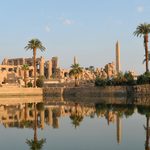
A journey to Luxor, Cairo or another archaeological destination introduces a world of temples, tombs, statues and inscriptions.
The contrast can be astonishing.
One day you are watching colorful fish beneath the Red Sea.
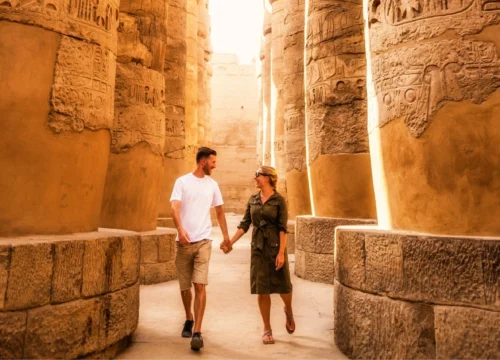
The next day you are standing beside massive columns covered with ancient inscriptions.
This is one of the defining features of an Egypt travel itinerary.
Luxor: Walking Through Ancient History
Luxor is one of the most important destinations for understanding ancient Egyptian civilization.
The modern city stands near the remains of ancient Thebes.
Visitors can explore major sites on both sides of the Nile.
On the East Bank, important attractions include:
- Luxor Temple,
- Karnak Temple.
On the West Bank, visitors can explore areas associated with:
- The Valley of the Kings,
- the Temple of Hatshepsut,
- the Colossi of Memnon,
- other ancient monuments and tombs.
Luxor Temple
Luxor Temple is particularly impressive because of its monumental architecture.
Large statues, columns, reliefs and inscriptions reveal the importance of kingship and religion in ancient Egypt.
The temple was not simply a place of worship.
It was connected with royal ideology and important religious festivals.
Walking through the complex allows travelers to see how architecture was used to communicate power, order and religious beliefs.
Karnak Temple
Karnak is a much larger and more complex temple area.
Its enormous columns and monumental spaces provide a sense of scale that is difficult to understand from photographs alone.
The famous Great Hypostyle Hall is especially impressive.
Hundreds of years of construction and modification created a complex that reflects the long history of ancient Egyptian religious architecture.
Cairo: Egypt’s Modern and Ancient Contrasts
Cairo introduces another side of Egypt.
The capital is a huge modern city with traffic, businesses, restaurants, residential neighborhoods and contemporary life.
But within and around the city are some of the world’s most famous archaeological monuments.
The Giza Plateau is the obvious example.
Here, visitors can see the Great Pyramid and the other major pyramids of Giza, along with the Great Sphinx.
The experience is powerful partly because of the contrast.
Modern Cairo exists not far away.
Ancient monuments stand against the desert.
The city and the ancient landscape exist side by side.
Museums: Connecting the Monuments With Their Stories
Archaeological sites show travelers the physical remains of ancient Egypt.
Museums add another dimension.
Museum collections can help explain:
- daily life,
- religion,
- writing,
- royal traditions,
- art,
- burial practices,
- craftsmanship,
- political history.
This is particularly useful for travelers who want more context rather than simply taking photographs of monuments.
A balanced historical itinerary can therefore combine outdoor archaeological sites with museum visits.
City Exploration: Seeing Modern Egypt
A diverse Egypt vacation should not focus entirely on ancient history.
Modern cities provide another perspective.
Hurghada
Hurghada is primarily known as a Red Sea resort destination, but it also has an urban side.
Travelers can explore local streets, restaurants, shops and different parts of the city.
This provides an opportunity to see a side of Egypt that is different from both the hotel environment and ancient monuments.
Cairo
Cairo offers an even stronger urban experience.
The scale of the city can be surprising for first-time visitors.
Markets, historic neighborhoods, museums, restaurants and modern commercial areas all contribute to the atmosphere.
A city visit can therefore complement the quieter experience of the Red Sea.
Relaxation Should Be Part of the Itinerary
One of the biggest mistakes travelers make when planning an Egypt vacation is trying to see everything.
Egypt has too much to offer for that approach.
If every day starts early and ends late, the trip can become exhausting.
A better itinerary balances exploration with downtime.
For example:
Morning: snorkeling.
Afternoon: beach relaxation.
Evening: dinner and free time.
Or:
Morning: historical sightseeing.
Afternoon: return to the hotel.
Evening: relaxed walk or dinner.
The goal is not to collect as many attractions as possible.
The goal is to enjoy the journey.
5-Day Egypt Itinerary: A Compact Experience
A five-day trip requires prioritization.
Trying to visit every major destination would create too much travel time.
For travelers staying in Hurghada, a practical approach is to focus on the Red Sea, desert and one major historical excursion.
Day 1 – Arrival and Relaxation
Arrive in Hurghada and settle into the hotel.
Keep the first day relatively light.
Enjoy the beach or pool.
Take a walk.
Have dinner.
The purpose is to start the vacation without immediately creating a demanding schedule.
Day 2 – Paradise Island or Red Sea Excursion
Spend the day on the Red Sea.
A boat excursion can include:
- island or beach time,
- snorkeling,
- swimming,
- relaxation.
This provides a full marine experience without requiring extensive travel.
Day 3 – Desert Adventure
Dedicate the next day to the Eastern Desert.
Depending on the selected tour, you might experience desert landscapes, off-road travel, camel riding, sunset or other activities.
Leave time in the evening for relaxation.
Day 4 – Luxor
Take a full-day trip to Luxor.
Focus on a manageable selection of major attractions rather than trying to see everything.
Possible highlights include:
- Karnak Temple,
- Luxor Temple,
- Valley of the Kings,
- Temple of Hatshepsut.
The exact route depends on the excursion and available time.
Day 5 – Beach and Departure
Use the final day for a relaxed morning.
Enjoy the hotel, beach or pool before departure.
This itinerary gives travelers three very different Egyptian experiences:
Sea + Desert + Ancient Egypt.
7-Day Egypt Itinerary: More Balance
Seven days provide greater flexibility.
Day 1 – Arrival in Hurghada
Relax and settle into the hotel.
Day 2 – Red Sea Adventure
Enjoy snorkeling, swimming and a boat trip.
Day 3 – Beach and Free Time
Keep this day intentionally relaxed.
Spend time at the hotel or explore Hurghada.
Day 4 – Desert Experience
Take a desert excursion.
Depending on the tour, combine scenery, cultural experiences and sunset.
Day 5 – Luxor
Explore the ancient world.
Visit major temples and archaeological sites.
Day 6 – Second Red Sea Experience
Choose another marine activity or simply enjoy the beach.
This could be a second snorkeling excursion, an island experience or a relaxed hotel day.
Day 7 – Departure
Have a relaxed morning before leaving.
The seven-day itinerary offers a better balance between activity and recovery.
10-Day Egypt Itinerary: The Full Contrast
Ten days allow travelers to introduce Cairo while still leaving time for the Red Sea.
Day 1 – Arrival in Hurghada
Hotel check-in and relaxation.
Day 2 – Paradise Island and Snorkeling
Spend a full day enjoying the Red Sea.
Day 3 – Free Beach Day
No major excursion.
Swim, relax and enjoy the hotel.
Day 4 – Desert Safari
Explore the Eastern Desert.
Enjoy the changing landscape and sunset.
Day 5 – Luxor
Visit major ancient sites.
Day 6 – Recovery and Relaxation
After the long Luxor excursion, keep the schedule light.
Day 7 – Cairo and Giza
Travel to Cairo if your schedule and transport arrangements make the trip practical.
Visit the Giza Plateau and selected attractions.
Day 8 – Cairo Exploration
Explore additional museums, historic areas or other attractions.
Day 9 – Return to Hurghada / Beach Time
Use the day for recovery and relaxation.
Day 10 – Final Morning
Enjoy a final breakfast and prepare for departure.
This itinerary gives travelers a broad overview of Egypt:
Red Sea + Desert + Luxor + Cairo + Relaxation.
How to Combine Different Experiences Without Getting Exhausted
The secret to a successful Egypt itinerary is not simply choosing attractions.
It is arranging them intelligently.
Alternate Active and Relaxed Days
Avoid scheduling demanding excursions on consecutive days whenever possible.
For example:
Day 1: Relaxation
Day 2: Boat and snorkeling
Day 3: Relaxation
Day 4: Desert
Day 5: Relaxation
Day 6: Luxor
This rhythm can make the trip feel much easier.
Consider Travel Times
Long-distance excursions require more than just sightseeing time.
There is transportation, pickup, waiting, meals and return travel.
A day trip to a distant destination can therefore feel very different from a short boat excursion from Hurghada.
Always consider the complete day rather than just the time spent at the attraction.
Why Hurghada Is a Useful Base
Hurghada is especially attractive for travelers who want variety.
The city offers direct access to the Red Sea while also providing connections to desert excursions and longer trips toward historical destinations.
This means travelers can stay in one hotel while experiencing very different environments.
You can wake up in a modern resort.
Then:
- travel across the Red Sea,
- explore coral reefs,
- drive into the desert,
- visit ancient temples,
- explore a modern city,
- return to the beach.
That flexibility is a major advantage.
Best Tours Hurghada and Planning Your Experiences
When planning several different activities, organization becomes important.
Travelers may want to compare excursions based on:
- duration,
- transportation,
- group size,
- activities,
- included meals,
- snorkeling opportunities,
- beach time,
- cultural experiences,
- departure times.
Best Tours Hurghada can be a useful starting point for travelers looking to explore different excursion possibilities from Hurghada.
The important thing is to choose activities based on your own priorities rather than trying to book every available tour.
A Vacation for Different Types of Travelers
One of the strongest advantages of Egypt’s diversity is that the same destination can suit very different travelers.
For Adventure Lovers
Combine:
- snorkeling,
- boat trips,
- desert safaris,
- off-road experiences,
- hiking where appropriate,
- sunset excursions.
For History Lovers
Focus on:
- Luxor,
- Karnak,
- Luxor Temple,
- Valley of the Kings,
- Cairo,
- Giza,
- museums.
For Families
Combine shorter activities with plenty of breaks.
A family itinerary might include:
- beach time,
- swimming,
- snorkeling where suitable,
- an easy boat trip,
- a carefully selected desert experience,
- one major historical excursion.
For Couples
Couples can create a balanced itinerary with:
- island trips,
- sunset experiences,
- desert evenings,
- relaxed beach days,
- Luxor,
- Cairo,
- quiet dinners.
For Relaxation Seekers
You do not need to fill every day.
A relaxing Egypt vacation can focus on:
- hotel beaches,
- swimming,
- spa time,
- island excursions,
- gentle snorkeling,
- sunset views,
- occasional sightseeing.
The Importance of Responsible Tourism
The diversity of Egypt also means travelers encounter sensitive environments.
Coral reefs need protection.
Desert ecosystems should be respected.
Ancient monuments are fragile archaeological resources.
Responsible tourism helps preserve these places for future visitors.
Simple actions make a difference:
- Do not touch coral.
- Do not collect shells or archaeological objects.
- Do not climb monuments where prohibited.
- Avoid leaving waste behind.
- Respect local communities.
- Follow guides’ instructions.
- Keep a respectful distance from wildlife.
- Choose organized excursions with appropriate safety practices.
Travel becomes more meaningful when the places we visit remain protected.
What Makes Egypt Feel Like Several Countries?
The answer is the extraordinary contrast between environments.
Think about the progression:
The Red Sea
Blue water.
Coral reefs.
Fish.
Boats.
Beaches.
The Desert
Golden landscapes.
Rocky mountains.
Open horizons.
Sunsets.
Stars.
Ancient Egypt
Temples.
Hieroglyphs.
Pharaohs.
Statues.
Tombs.
Modern Egypt
Busy streets.
Markets.
Restaurants.
Hotels.
Museums.
Contemporary city life.
Relaxation
Quiet beaches.
Swimming pools.
Sea views.
Slow mornings.
Sunset evenings.
All of these experiences can belong to one journey.
That is what makes Egypt unusual.
Frequently Asked Questions About Traveling Through Different Sides of Egypt
Is Egypt a good destination for a varied vacation?
Yes. Egypt offers marine environments, deserts, archaeological sites, modern cities, museums and resort areas. Travelers can combine these experiences in one itinerary.
Can I combine a beach holiday with sightseeing?
Absolutely. Hurghada is particularly useful for travelers who want to combine Red Sea relaxation with excursions to places such as Luxor.
Can I visit Luxor from Hurghada?
Day trips between Hurghada and Luxor are commonly organized, although the exact travel time, itinerary and schedule depend on the excursion.
Should I visit Cairo and Luxor on the same short trip?
It depends on your available time. For five days, trying to include both can make the trip very demanding. With seven to ten days, there is more flexibility.
How many days are ideal for Egypt?
There is no single answer. Five days can provide a compact experience, while seven to ten days allow a more balanced combination of sea, desert, history and city exploration.
Is snorkeling suitable for beginners?
Snorkeling can be suitable for beginners when conditions are appropriate. Travelers should follow the guide’s instructions and remain within their comfort and ability levels.
Can I see marine animals during a Red Sea excursion?
The Red Sea supports diverse marine life, but encounters with particular animals cannot be guaranteed. Wildlife should always be observed respectfully.
Is the desert cold at night?
Temperatures can fall after sunset, sometimes significantly compared with daytime temperatures. The exact conditions depend on season, location and weather, so an additional layer can be useful.
Final Thoughts: One Country, Many Experiences
An Egypt vacation does not have to be defined by a single type of experience.
It can begin with a quiet breakfast overlooking the Red Sea.
A few hours later, you may be snorkeling above a coral reef.
Another day can take you into the Eastern Desert, where mountains replace beaches and the sunset turns the landscape gold.
Then comes Luxor.
Suddenly, the focus changes completely.
You are walking between ancient columns, looking at hieroglyphs and standing in front of monuments created thousands of years ago.
Later, you can return to modern Egypt.
A city, a restaurant, a market or a comfortable hotel provides another contrast.
And between all these experiences, there is something equally important: time to relax.
This is why Egypt can feel like several countries in one journey.
It combines sea and desert, ancient history and modern life, adventure and relaxation, nature and culture.
For travelers based in Hurghada, the possibilities are particularly diverse. A carefully planned itinerary can include a Red Sea boat trip, snorkeling, an island excursion, a desert adventure, a journey to Luxor and, with enough time, a visit to Cairo and the pyramids.
The key is not to see everything.
The key is to create a journey with contrast.
A five-day trip can focus on the Red Sea, desert and Luxor.
A seven-day holiday can add more relaxation and another marine experience.
A ten-day itinerary can expand the journey to Cairo while still preserving time for the beach.
With thoughtful planning and a realistic schedule, Egypt can offer something that few destinations can match: the feeling of moving between completely different worlds while remaining within one extraordinary country.