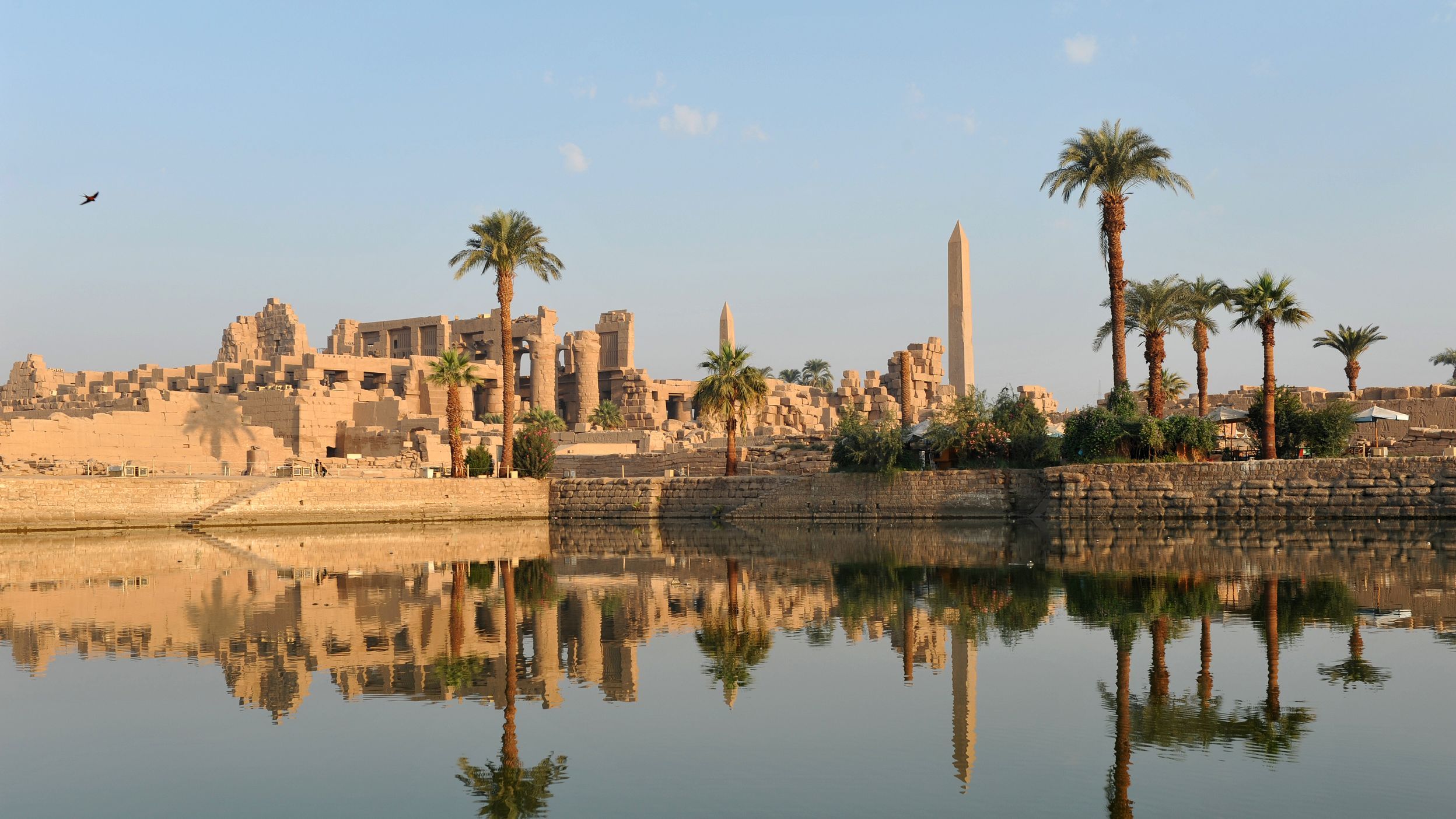
When people hear the word Egypt, they often imagine endless sand, ancient pyramids and monumental temples rising from a dry landscape. The desert is certainly one of the defining features of the country, but Egypt is far more diverse than this familiar image suggests.
From the colorful coral reefs of the Red Sea to the green landscapes surrounding the Nile, from rugged mountains and coastal plains to palm-filled oases and wetlands, Egypt contains a remarkable variety of natural environments.
This diversity is one of the reasons Egypt has become such an important destination for different types of travelers. Some visitors come for beach holidays and water sports. Others are interested in desert adventures, wildlife, photography, hiking or peaceful landscapes. Many combine several experiences during the same trip.
The natural landscapes of Egypt also explain why tourism developed differently in different regions. The Red Sea coast became famous for diving and snorkeling. The Nile Valley became a center of cultural tourism because ancient settlements and monuments developed along the river. Desert regions attract adventure travelers, while oases offer a completely different experience of life in an arid environment.
Understanding Egypt through its landscapes therefore provides a new way to understand the country itself.
Egypt Is More Than a Desert Destination
The desert covers a huge part of Egypt, but describing the entire country as a desert destination leaves out many important environments.
Egypt includes:
- Red Sea coral reefs
- sandy and rocky deserts
- mountain ranges
- fertile Nile landscapes
- Mediterranean coastal areas
- Red Sea beaches and bays
- freshwater and saltwater oases
- wetlands and lakes
- river islands
- protected natural areas
- agricultural landscapes
These environments are not isolated from one another. In many places, they exist side by side.
One of the clearest examples can be found along the Red Sea. A traveler may stand in a dry mountain landscape in the morning and later swim above a colorful coral reef.
Along the Nile, green agricultural fields contrast sharply with the surrounding arid terrain.
In an oasis, palm trees and freshwater sources create pockets of life within a much larger desert environment.
This contrast is one of the most fascinating characteristics of Egyptian nature.
The Red Sea – A World Beneath the Water
The Red Sea is one of Egypt’s most important natural attractions and one of the country’s strongest tourism resources.
For many international visitors, the first introduction to Egypt’s natural diversity happens underwater rather than on land.
The Red Sea contains extensive coral reef ecosystems that support a wide variety of marine organisms. Colorful fish, corals and other reef life create underwater landscapes that look completely different from the surrounding desert.
This is particularly important around destinations such as Hurghada, Marsa Alam and Sharm El Sheikh.
Coral Reefs and Marine Life
Coral reefs are living ecosystems rather than simple underwater rocks.
They provide habitats and shelter for many marine organisms. The structure of a reef creates spaces where fish and other animals can feed, hide and reproduce.
For visitors, this creates opportunities for:
- snorkeling,
- scuba diving,
- underwater photography,
- glass-bottom boat trips,
- marine observation,
- educational nature experiences.
The exact experience can vary according to the location, weather, water conditions and visibility.
That is important to remember when planning a snorkeling or diving excursion. Nature does not operate according to a fixed schedule.
A reef that looks different in the morning may appear completely different under another combination of sunlight, water movement and visibility.
Hurghada – Where Desert and Sea Meet
Hurghada is one of the best examples of how different Egyptian landscapes can come together in a single destination.
The city sits between the Red Sea and the Eastern Desert.
This geographical position gives travelers access to two very different environments.
On one side is the sea, with beaches, islands, coral reefs and marine activities.
On the other side is a dry landscape characterized by mountains, valleys and rocky desert terrain.
This combination has had a major influence on tourism in Hurghada.
A traveler can spend one day snorkeling in the Red Sea and another exploring the desert by vehicle. Some excursions even combine several elements in one program.
Activities commonly associated with the region include:
- snorkeling trips,
- diving,
- boat excursions,
- island visits,
- desert safaris,
- quad biking,
- camel riding,
- horseback riding,
- sunset experiences.
For travelers looking to organize excursions from Hurghada, Best Tours Hurghada can be a useful option for exploring different activities and discovering how the region’s natural environments can become part of a varied holiday.
The Nile – A Green Landscape in an Arid Country
The Nile River is perhaps the most important natural feature in Egyptian geography.
For thousands of years, the river has supported agriculture, settlements and transportation. Even today, the contrast between the green Nile Valley and the surrounding desert is one of the country’s most distinctive landscapes.
Travelers arriving in Egypt from a desert region may be surprised by the amount of vegetation near the river.
Palm trees, agricultural fields and cultivated land create a green corridor through an otherwise dry environment.
Why the Nile Is So Important to Tourism
The Nile does not only have environmental importance. It is also central to Egyptian cultural tourism.
Many of the country’s most famous ancient sites developed along or near the river.
Cities such as Luxor and Aswan demonstrate how closely natural geography and human history are connected.
The river made agriculture possible. Agriculture supported permanent settlements. Settlements developed into cities. Religious and political centers grew in these areas.
As a result, visitors can experience both nature and history within the same landscape.
A trip along the Nile may include:
- river cruises,
- traditional sailing boats,
- riverside walks,
- visits to agricultural villages,
- photography,
- bird observation,
- historical sightseeing.
The landscape itself becomes part of the travel experience.
Luxor – Where River, Agriculture and History Meet
Luxor is one of the best destinations for understanding the relationship between nature and civilization.
The Nile flows through the city while agricultural land extends along parts of the river valley.
Beyond the cultivated areas, the landscape changes dramatically. The green fields give way to dry hills and desert.
This sharp transition is particularly visible on the West Bank.
Ancient tombs and temples are located within a landscape shaped by the relationship between the river and the desert.
For photographers, this creates remarkable contrasts:
green fields + blue river + golden desert + ancient monuments.
The scenery demonstrates why Egypt should not be viewed simply as a collection of archaeological attractions.
The landscape surrounding the monuments is part of the story.
Egypt’s Deserts – More Than Sand Dunes
The desert is undoubtedly a major part of Egypt’s identity, but even the desert itself is more diverse than many travelers expect.
There are sandy deserts, rocky plateaus, gravel plains, mountain valleys and unusual geological formations.
The major desert regions include the Western Desert, Eastern Desert and the Sinai Desert.
Each has its own character.
The Eastern Desert
The Eastern Desert stretches between the Nile Valley and the Red Sea.
Its landscape includes rugged mountains, dry valleys and rocky terrain.
Because of its proximity to the Red Sea resorts, it has become an important destination for adventure tourism.
Visitors can explore parts of the region through organized desert excursions.
Common activities include:
- 4×4 safaris,
- quad biking,
- camel rides,
- mountain viewpoints,
- sunset tours,
- cultural experiences,
- stargazing.
The desert is particularly impressive at sunrise and sunset, when the low angle of the sun creates long shadows and changes the appearance of the rocks.
The Western Desert – Vast Spaces and Unique Landscapes
The Western Desert forms a large part of the Sahara within Egypt.
Although much of it appears extremely dry, the region contains a variety of geological and ecological environments.
Among the best-known destinations are the oases and unusual rock formations found in different parts of the desert.
Traveling through this region offers a very different experience from a beach holiday.
There are fewer urban distractions. The landscape dominates the experience.
For travelers interested in photography, geology and adventure, the Western Desert can be particularly rewarding.
The White Desert – Nature Sculpted by Time
The White Desert is one of Egypt’s most unusual natural landscapes.
Located in the Western Desert, the area is famous for its pale rock formations.
Wind erosion has shaped the limestone into unusual forms over long periods of time.
Some formations resemble mushrooms, animals or abstract sculptures.
Their appearance changes according to the light.
At midday, the rocks can appear bright and almost white. During sunset, warmer tones and stronger shadows can completely transform the scene.
This makes the White Desert particularly attractive to photographers.
It also demonstrates an important point about Egyptian nature: a desert does not necessarily mean an endless field of sand.
The Black Desert – A Dramatic Geological Contrast
The Black Desert provides a dramatic contrast to the White Desert.
Dark volcanic-looking hills and rocky surfaces dominate the landscape.
The difference between the two areas demonstrates how varied desert geology can be.
Instead of imagining the Sahara as a single uniform environment, travelers can discover a landscape containing different rocks, elevations, colors and geological formations.
This diversity has made desert tourism increasingly attractive to visitors searching for experiences beyond conventional sightseeing.
Mountains of Egypt – Rugged Landscapes Beyond the Sand
Egypt also has impressive mountain landscapes.
The Eastern Desert contains rugged mountain ranges extending toward the Red Sea.
The Sinai Peninsula is particularly well known for its dramatic mountains.
These landscapes provide a completely different environment from Egypt’s flat agricultural areas.
Mountain tourism can involve:
- hiking,
- landscape photography,
- sunrise excursions,
- cultural visits,
- desert trekking,
- nature observation.
The experience depends strongly on the location and the organization of the excursion.
Mountain environments can be physically demanding, especially in hot weather. Travelers should therefore consider the conditions, route difficulty and their own fitness before participating in demanding activities.
Sinai – Mountains, Coast and Desert in One Region
Sinai Peninsula is another excellent example of Egypt’s natural diversity.
Within a relatively compact geographical region, travelers can find mountains, desert and Red Sea coastline.
The coastal areas around Sharm El Sheikh and Dahab are associated with marine tourism, while inland landscapes offer mountains and desert valleys.
This creates opportunities for different styles of travel.
A visitor might spend the morning in a coastal environment and later travel into the mountains.
Such combinations make Sinai particularly attractive to adventure travelers and photographers.
Egypt’s Coastal Landscapes
Egypt has two major marine environments: the Mediterranean coast in the north and the Red Sea coast in the east.
They offer very different tourism experiences.
The Mediterranean Coast
The northern coastline includes sandy beaches, coastal cities and lagoons.
The landscape is influenced by the Mediterranean climate and differs from the extremely dry environments farther south.
The coast is important for domestic tourism as well as regional travel.
The Red Sea Coast
The Red Sea coastline is particularly significant for international tourism.
It combines:
- sandy beaches,
- coral reefs,
- islands,
- bays,
- desert mountains,
- clear seawater.
This combination has helped destinations such as Hurghada, Marsa Alam and Sharm El Sheikh become major holiday centers.
Marsa Alam – A Strong Connection With Nature
Marsa Alam is located farther south along the Red Sea coast.
The region is known for its beaches, coral reefs and relatively close relationship between desert and sea.
For nature-focused travelers, this combination is particularly attractive.
Marine excursions can provide opportunities to snorkel or dive, while inland trips reveal the dry landscapes surrounding the coast.
The area also demonstrates why responsible tourism is important.
Coral reefs and marine habitats are sensitive environments. Visitors should avoid touching coral, feeding wildlife or leaving waste behind.
Oases – Green Islands in the Desert
One of the most fascinating natural features of Egypt’s deserts is the presence of oases.
An oasis is an area where water makes plant and human life possible within an otherwise arid environment.
Egypt’s oases include Siwa, Bahariya, Farafra, Dakhla and Kharga.
Siwa Oasis
Siwa Oasis is among the most famous.
Palm groves, freshwater springs and salt lakes create a striking contrast with the surrounding desert.
The landscape is visually distinctive, but the human culture of the oasis is equally important.
Visitors can experience traditional architecture, local agricultural practices and desert landscapes within the same trip.
Wetlands and Lakes – The Overlooked Side of Egypt
When discussing Egyptian landscapes, wetlands are often overlooked.
Yet the country contains important lakes, lagoons, marshes and coastal wetland systems.
These environments are particularly important for birds and other wildlife.
The Nile Delta
The northern Nile Delta contains an extensive network of waterways, agricultural areas and wetlands.
The Delta has historically been one of Egypt’s most fertile regions.
Its landscape differs dramatically from the surrounding desert.
Northern Coastal Lakes
Several lakes along Egypt’s Mediterranean coast form important habitats for birds and aquatic species.
These areas demonstrate that Egypt’s natural diversity is not limited to famous tourist destinations.
For travelers interested in birdwatching and ecological tourism, wetlands can offer experiences that are very different from traditional sightseeing.
Birdlife and Wildlife in Egypt
Egypt may appear dry at first glance, but its different ecosystems support a surprising range of wildlife.
The Nile and its wetlands provide habitats for numerous bird species.
The Red Sea supports marine life associated with coral reefs and coastal ecosystems.
Desert environments are home to specially adapted animals capable of surviving with limited water.
The exact species visible during a trip depend on the region, season and environmental conditions.
Wildlife tourism should therefore be based on observation rather than guaranteed encounters.
A responsible traveler should maintain distance from animals and avoid feeding or disturbing them.
How Natural Landscapes Shape Egyptian Tourism
Egypt’s tourism industry has developed partly because of its extraordinary environmental variety.
Different landscapes create different tourism products.
| Natural environment | Tourism activities |
|---|---|
| Red Sea reefs | Snorkeling, diving, boat trips |
| Beaches | Swimming, relaxation, water sports |
| Nile Valley | Cruises, cultural tourism, photography |
| Deserts | Safaris, quad biking, camel rides |
| Mountains | Hiking, trekking, photography |
| Oases | Cultural tourism, nature trips |
| Wetlands | Birdwatching, ecological tourism |
| Coastal areas | Beach holidays and marine activities |
This diversity means that Egypt can appeal to travelers with completely different interests.
A person who loves diving may choose Marsa Alam.
Someone interested in ancient history may focus on Luxor.
An adventure traveler may prefer a desert safari.
A photographer may want to combine all of them.
Combining Nature and Culture
One of the strongest advantages of traveling in Egypt is the possibility of combining natural and cultural experiences.
The country’s archaeological sites did not develop separately from the environment.
The Nile helped create the conditions that supported ancient civilization.
The desert protected some archaeological sites from development and agriculture.
The Red Sea connected Egypt to maritime routes and continues to support tourism today.
This means that history and nature can often be experienced during the same journey.
A trip to Luxor, for example, is not only about temples and tombs. It is also about the Nile Valley, agricultural fields, desert hills and the changing landscape around the river.
Photography and Egypt’s Natural Landscapes
Egypt is an excellent destination for landscape photography because of its strong contrasts.
Photographers can capture:
- coral reefs beneath clear water,
- palm trees against desert dunes,
- mountains beside the Red Sea,
- green fields along the Nile,
- ancient monuments surrounded by desert,
- salt lakes in desert oases,
- unusual rock formations,
- sunsets over mountains and sea.
Light plays an especially important role.
The same landscape can look completely different in the morning, afternoon and evening.
Sunrise and sunset are often particularly attractive because shadows become longer and colors become warmer.
However, photographers should always prioritize safety and environmental protection over getting the perfect picture.
Responsible Tourism in Natural Areas
The popularity of Egypt’s natural landscapes also creates responsibilities.
Natural environments can be fragile.
Coral reefs can be damaged by careless contact. Desert sites can be affected by litter and irresponsible vehicle use. Wildlife can be disturbed by excessive human interaction.
Visitors can help protect these environments through simple actions.
In the Red Sea
Do not:
- touch corals,
- stand on reefs,
- chase marine animals,
- feed fish,
- throw waste into the water,
- remove coral or shells as souvenirs.
In the desert
Travelers should:
- avoid unnecessary damage to vegetation,
- respect protected areas,
- leave natural formations untouched,
- follow designated routes where applicable,
- take waste away,
- respect local communities.
Responsible tourism allows visitors to enjoy nature without treating it as something disposable.
The Future of Nature-Based Tourism in Egypt
As travelers increasingly search for meaningful experiences, nature-based tourism has significant potential in Egypt.
The country’s existing attractions already provide a strong foundation.
Marine tourism can continue to focus on responsible snorkeling and diving.
Desert tourism can emphasize landscapes, geology, astronomy and cultural experiences.
Oases can attract visitors interested in slower travel and local traditions.
Wetlands can become more important for birdwatching and ecological education.
Mountain regions can appeal to hikers and adventure travelers.
The challenge is to ensure that tourism growth does not damage the natural environments that attract visitors in the first place.
Sustainable planning, visitor education and responsible excursion practices will remain important.
How to Experience Egypt’s Natural Diversity in One Trip
A traveler does not necessarily need to cross the entire country to experience several landscapes.
A stay in Hurghada can already combine the sea and desert.
For example:
Day 1: Relax on the Red Sea coast.
Day 2: Take a snorkeling or boat excursion.
Day 3: Explore the desert landscape.
Day 4: Enjoy a relaxed beach day.
A longer itinerary could add Luxor.
Then the traveler experiences:
Red Sea + desert + Nile Valley + ancient landscapes.
With even more time, Cairo, Sinai or one of the desert oases can be added.
The important point is to avoid creating an itinerary that is so crowded that the journey becomes exhausting.
Egypt is a large country. Distances can be significant, and each landscape deserves time to be appreciated.
Why Egypt Is an Ideal Destination for Different Types of Travelers
The diversity of natural environments allows Egypt to appeal to a wide range of visitors.
For beach lovers
The Red Sea offers warm-water experiences, beaches and coastal relaxation.
For divers and snorkelers
Coral reefs provide access to a fascinating underwater world.
For adventure travelers
Deserts and mountains create opportunities for safaris and outdoor activities.
For photographers
The contrasts between sea, desert, river and mountains provide endless subjects.
For nature lovers
Oases, wetlands, reefs and protected areas offer opportunities to explore different ecosystems.
For cultural travelers
The Nile landscapes connect directly with the history of ancient Egyptian civilization.
For families
A combination of beaches, boat trips and gentle nature experiences can create a varied holiday.
Egypt’s Greatest Natural Attraction May Be Its Contrasts
Perhaps the most impressive feature of Egyptian nature is not any single landscape.
It is the contrast between them.
Imagine standing beside the Nile, surrounded by green fields, while only a short distance away the landscape becomes dry and rocky.
Imagine leaving the desert mountains and reaching the Red Sea, where the underwater world suddenly becomes colorful and full of life.
Imagine finding a green palm oasis deep inside an arid landscape.
Imagine watching the sun set over desert rocks and then seeing the sky fill with stars.
These contrasts challenge the simple idea that Egypt is only a desert country.
The desert is important, but it is only one chapter in a much larger natural story.
Frequently Asked Questions About Egypt’s Natural Landscapes
What are the most famous natural landscapes in Egypt?
Some of the best-known natural landscapes include the Red Sea coral reefs, the Nile Valley, the Egyptian deserts, the Sinai mountains, the White Desert, the oases and several coastal and wetland areas.
Is Egypt really mostly desert?
Large areas of Egypt are desert, but the country also contains rivers, agricultural landscapes, mountains, coral reefs, coastal ecosystems, oases and wetlands.
Where can you see coral reefs in Egypt?
The Red Sea coast is the main area for coral reef experiences. Popular destinations include Hurghada, Marsa Alam and Sharm El Sheikh.
Can you combine desert and sea experiences?
Yes. Hurghada is a particularly convenient example because it lies between the Red Sea and the Eastern Desert. Many organized excursions allow travelers to experience both environments during the same holiday.
Are there mountains in Egypt?
Yes. Egypt has mountain landscapes in the Eastern Desert and Sinai Peninsula, among other areas.
Does Egypt have wetlands?
Yes. The Nile Delta and several northern coastal lakes and lagoons contain wetland environments that are important for birds and other wildlife.
What is the best natural destination for photographers?
There is no single answer. The Red Sea is excellent for underwater photography, while the White Desert, Nile Valley, Sinai mountains and oases offer very different landscape opportunities.
Is wildlife guaranteed on nature excursions?
No. Wildlife is naturally unpredictable. Animals may move, hide or remain in areas that visitors cannot access. Responsible tours should focus on observation rather than guarantees.
Final Thoughts – Discover the Egypt Beyond the Stereotype
Egypt is often introduced through its pyramids and deserts, but its natural identity is much richer.
The Red Sea coral reefs reveal a colorful underwater ecosystem.
The Nile Valley creates a green landscape that has supported human civilization for thousands of years.
The Eastern and Western Deserts offer vast spaces, dramatic geology and opportunities for adventure.
The Sinai and Red Sea mountains provide rugged scenery and outdoor experiences.
The coastal areas connect beaches and marine environments with tourism.
The oases demonstrate how life can flourish around water in the middle of an arid region.
The wetlands and lakes add another layer of biodiversity that is often overlooked by international visitors.
Together, these environments make Egypt far more than a destination for historical sightseeing.
They make it a country where travelers can move from coral reefs to desert mountains, from green river valleys to palm-filled oases, and from coastal beaches to ancient landscapes.
This natural diversity also explains why tourism in Egypt can be so varied. A single holiday can include snorkeling in the Red Sea, a desert safari near Hurghada, a journey through the Nile Valley and a visit to one of the country’s ancient cities.
For travelers staying in Hurghada, companies such as Best Tours Hurghada can help turn the region’s natural diversity into practical excursion experiences, from marine adventures to desert exploration.
Ultimately, the beauty of Egypt lies in its contrasts.
It is a country where water and desert exist side by side, where green fields emerge beside dry landscapes, where mountains meet the sea and where ancient history developed within a remarkable natural environment.
Egypt is not simply a land of sand and monuments. It is a country of reefs, rivers, mountains, coastlines, oases, wetlands and deserts — a destination where nature itself becomes part of the journey.