Egypt’s desert after dark offers a completely different experience from the bright, busy atmosphere of daytime sightseeing. During the day, the desert can appear vast, hot and almost endless. At night, the same landscape changes character.
The sun disappears behind the horizon.
The temperature begins to fall.
The sand and rocks take on different shades.
Sounds become easier to notice.
Then darkness gradually covers the landscape, and the night sky becomes the main attraction.
For travelers visiting Egypt, spending an evening or night in the desert can be a memorable way to experience the country’s natural environment. Around Hurghada and other desert regions, organized excursions may combine sunset views, traditional activities, dinner, music and opportunities to observe the stars.
However, a successful desert night experience in Egypt requires preparation. Desert temperatures can change significantly after sunset. Clothing that feels comfortable during the afternoon may not be enough later in the evening, especially during cooler periods of the year.
Understanding the environment is therefore just as important as enjoying it.
Why Is the Desert So Different After Sunset?
The desert changes dramatically once the sun goes down.
During daylight hours, sunlight heats the surface. Sand and rocks can become very warm, especially during hot weather.
After sunset, the situation changes.
Without direct sunlight, the ground begins to lose heat. The temperature can fall noticeably, and the difference can be especially clear in open areas where there is little vegetation or shelter.
This creates one of the most interesting contrasts of a desert experience.
You may begin your excursion feeling warm.
A few hours later, you may wish you had brought an extra layer.
This is why what to wear for a desert night in Egypt is an important part of preparation.
Watching the Desert Sunset
Sunset is often the moment when a daytime desert excursion begins to transform into a nighttime experience.
The sun gradually approaches the horizon.
The bright colors of the landscape become softer.
Long shadows stretch across the ground.
Sand dunes, rocks and distant mountains can appear more defined.
The landscape may change from bright gold to orange, pink and darker earth tones.
Sunset is also one of the best moments for photography.
The lower position of the sun creates interesting light and shadows without the intense brightness of midday.
Travelers should take their time during this part of the experience.
Instead of immediately focusing on activities, simply watching the changing landscape can be one of the most rewarding moments of a desert excursion.
Why Sunset Photography Is Special
The desert offers a simple visual environment.
There may be very few buildings, trees or other objects competing for attention.
This makes shapes and shadows especially important.
A single mountain ridge can become a strong silhouette.
Footprints in the sand can create patterns.
A person standing against the horizon can provide scale.
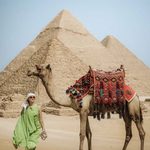
Camels, traditional tents or other elements of a desert experience can also become interesting photographic subjects.
Smartphone cameras can capture excellent sunset images, but travelers should remember that the scene may look different to the eye than it does on a screen.
Take some photographs, but also spend time simply watching the sunset.
The Temperature After Sunset
One of the most important things to understand about a night in the Egyptian desert is the changing temperature.
Deserts are known for large differences between daytime and nighttime conditions.
The exact temperature depends on several factors, including:
- Season
- Time of year
- Wind
- Cloud cover
- Location
- Elevation
- Duration of the excursion
A desert night in summer may still feel warm.
A winter evening can feel considerably colder.
This is why travelers should not assume that Egypt’s generally warm reputation means that the desert will always be warm at night.
What to Wear for a Desert Night
Preparation is simple but important.
If your excursion continues after sunset, consider bringing an additional layer.
Useful options may include:
- A light jacket
- A warm sweater
- Long trousers
- Comfortable closed shoes
- A scarf or light wrap
- Extra layers during cooler seasons
Layering is particularly practical.
You can remove a layer when you are warm and put it back on as the temperature drops.
This is usually more useful than wearing one very heavy item from the beginning.
Why Closed Shoes Are Useful
Desert terrain can include sand, stones and uneven ground.
Comfortable closed shoes can therefore be more practical than open sandals during a nighttime excursion.
Darkness also makes it more difficult to see exactly where you are stepping.
Good footwear can help you move more comfortably around a campsite or desert area.
Always follow the instructions of the excursion provider regarding where guests can walk.
Darkness Changes the Landscape
Once the sun has completely disappeared, the desert becomes a very different place.
During the day, you can see distant mountains, tracks and open terrain.
At night, visibility is reduced.
Artificial lights may be limited or absent in remote areas.
This creates an atmosphere that many travelers rarely experience in cities or resort centers.
The darkness can make the landscape feel much larger.
You may not be able to see where the desert ends.
The horizon can almost disappear.
The surroundings become quieter.
Instead of looking across kilometers of land, your attention moves upward toward the sky.
The Silence of the Desert
Silence is one of the most memorable parts of a desert night.
It is not necessarily complete silence.
You may hear:
- Wind
- Footsteps
- Voices from the camp
- Animals
- Distant vehicles
- Music from a traditional performance
But compared with a city, the number of sounds is dramatically reduced.
This makes small sounds more noticeable.
The wind moving across the sand can become part of the experience.
For many travelers, this sense of quiet is as important as the stars.
Looking at the Stars
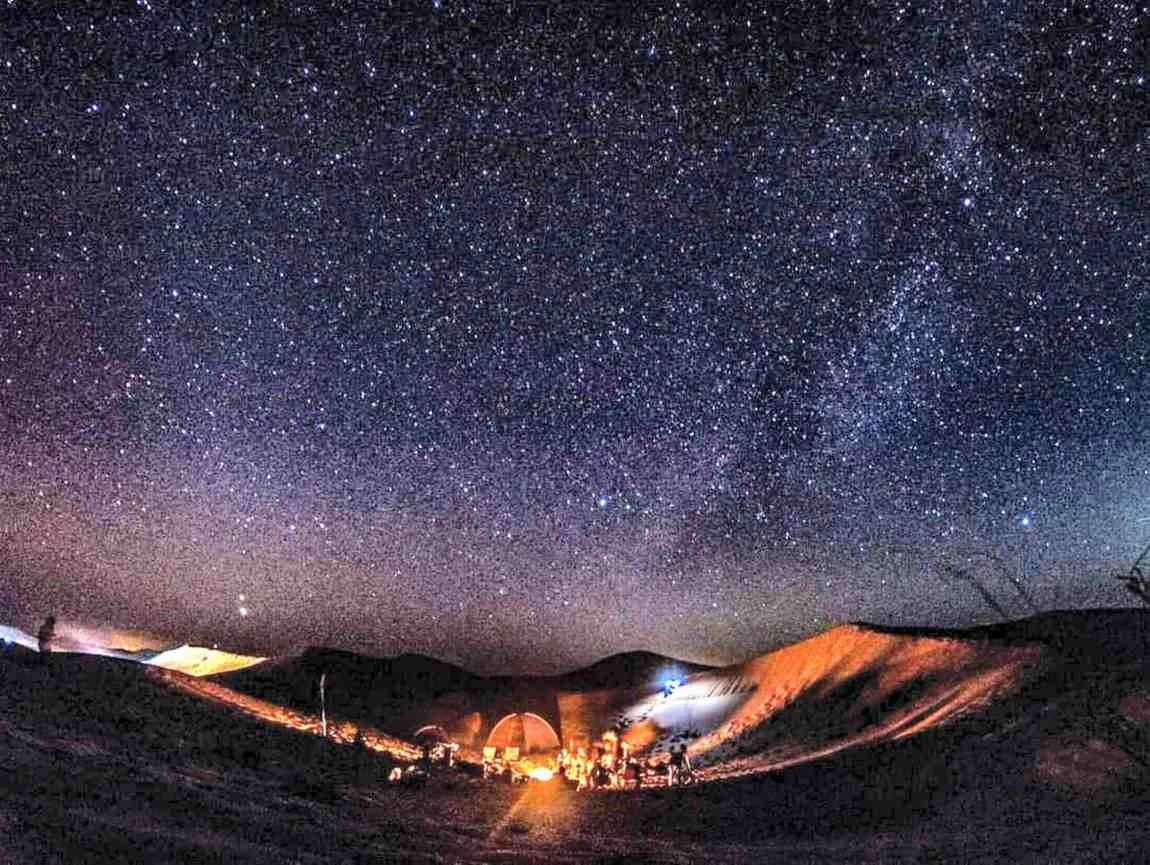
The night sky is often the highlight of a desert experience.
Away from strong artificial lighting, the sky can appear much darker.
This makes stars easier to observe.
On a clear night, travelers may see many stars that are difficult to notice in brightly illuminated cities.
The experience can be especially impressive for visitors who live in urban areas where light pollution affects the night sky.
However, the quality of stargazing depends on conditions.
Clouds, haze, dust, moonlight and nearby artificial lights can all influence visibility.
Therefore, travelers should enjoy the possibility of excellent views without expecting a perfectly clear sky every night.
What Is Light Pollution?
Light pollution refers to artificial light that makes the night sky brighter than it would naturally appear.
Cities, resorts, roads and other developed areas can produce significant artificial light.
This makes faint stars harder to see.
Remote desert locations can provide darker surroundings, which can improve the visibility of stars.
But not every desert excursion is far from artificial lights.
The location of the camp matters.
If astronomy is particularly important to you, ask the provider where the evening experience takes place and how remote the location is.
Astronomy in the Egyptian Desert
A desert night can also become an introduction to astronomy.
You do not need to be an expert.
Simply learning to recognize a few bright stars or constellations can make the experience more meaningful.
Guides may point out visible objects in the sky and explain basic information about:
- Stars
- Planets
- Constellations
- The Moon
- Navigation
- Ancient observations of the sky
The ancient Egyptians had a strong relationship with astronomy.
The sky was important to their calendar, religious beliefs, agriculture and understanding of time.
This makes astronomy particularly interesting in Egypt because modern visitors are observing the same night sky that ancient communities also watched thousands of years ago.
Ancient Egypt and the Night Sky
The ancient Egyptians carefully observed celestial cycles.
They developed calendars and tracked the movement of stars and other celestial objects.
Certain stars and constellations had religious and cultural significance.
The orientation of some ancient monuments has also been studied in relation to astronomical phenomena.
However, not every astronomical claim made about ancient Egyptian monuments is equally well supported.
Travelers should distinguish between established archaeological evidence and modern interpretations.
A desert evening is an excellent opportunity to appreciate ancient Egypt’s interest in the sky without turning every constellation into an unsupported mystery.
The Nile, Desert and Stars
Egypt’s geography makes the contrast between the Nile Valley and the desert particularly interesting.
Along the Nile, settlements and agriculture create areas with artificial lighting.
Farther into the desert, the environment becomes much darker.
This difference explains why desert locations can be attractive for stargazing.
The desert also provides a wide horizon.
There are fewer tall buildings or dense vegetation blocking the view.
This can make the sky feel enormous.
Traditional Desert Experiences
A nighttime desert excursion is often about more than astronomy.
Many organized experiences combine natural surroundings with elements of traditional desert culture.
Depending on the excursion, travelers may encounter:
- Traditional-style tents
- Egyptian food
- Tea
- Local music
- Cultural performances
- Camel experiences
- Bedouin-inspired settings
- Traditional crafts
- Stories about desert life
The exact activities vary between providers.
It is important not to treat a staged tourist performance as a complete representation of every aspect of Bedouin culture.
Instead, view it as an organized cultural experience designed for visitors.
Responsible tourism also means respecting local communities and avoiding stereotypes.
Traditional Food Under the Stars
Food can become an important part of a desert evening.
Some excursions include dinner or traditional Egyptian dishes.
Eating outdoors, surrounded by darkness and open desert, can create an atmosphere that is very different from eating in a restaurant.
The experience is not only about the menu.
It is about the setting.
The same meal can feel completely different when enjoyed under a dark sky.
Travelers should check in advance what food and drinks are included in their excursion.
Tea in the Desert
Tea is another common element of desert hospitality.
A warm drink can be especially enjoyable after sunset when temperatures begin to fall.
For travelers visiting during cooler months, this small detail can become surprisingly memorable.
It also creates an opportunity to slow down.
Instead of constantly moving from one attraction to another, guests can sit, talk and observe the surroundings.
Camel Experiences at Night
Some desert excursions may include camel rides around sunset or during the evening.
A camel can be closely associated with the traditional image of desert travel in Egypt.
However, animal welfare should always remain a priority.
Travelers should choose providers that treat camels respectfully, provide water and rest, use appropriate equipment and avoid excessive workloads.
Do not assume that a traditional-looking activity is automatically responsible.
Ask questions when necessary.
The welfare of animals should never be sacrificed for a photograph or tourist performance.
Desert Nights and Responsible Tourism
A responsible desert excursion should respect both people and the environment.
The desert may look empty, but it is not a place without ecological value.
Plants, animals and geological features exist in these environments.
Travelers should avoid leaving waste behind.
Do not collect rocks, plants or other natural objects unless specifically permitted.
Stay on designated routes when requested.
Avoid unnecessary noise in sensitive natural areas.
If you see wildlife, observe it from an appropriate distance.
Responsible tourism helps preserve the desert for future visitors.
Why the Desert Feels Colder at Night
The feeling of cold in the desert can surprise travelers.
Several factors contribute to this.
The desert often has low humidity.
There may be limited vegetation and cloud cover.
The ground can lose heat relatively quickly after sunset.
Wind can also increase the sensation of cold.
This is why a person who feels comfortable in the afternoon may become uncomfortable later in the evening.
The solution is simple:
Prepare for the temperature to change.
Desert Night Preparation Checklist
Before leaving for an evening desert excursion, consider the following checklist.
Clothing
Bring an extra layer.
Shoes
Choose comfortable footwear suitable for sand and uneven terrain.
Water
Stay hydrated, even if the evening feels cooler.
Sun protection
You may still spend part of the excursion before sunset, so sunscreen and sunglasses can remain useful.
Camera
Charge your phone or camera before leaving.
Power bank
A power bank can be useful during a long excursion.
Personal medication
Bring any regular personal medication you may need.
Small flashlight
If the provider recommends one, a small flashlight can be useful when moving around darker areas.
However, avoid shining bright lights toward other guests during astronomy activities.
Night Photography in the Desert
Photographing the desert at night can be challenging.
A smartphone may capture the Moon and some stars, but dedicated cameras can provide more control.
The most important issue is usually stability.
For long exposures, a tripod can help.
A stable camera allows the shutter to remain open longer without producing excessive camera shake.
Travelers should also understand that stars appear to move across long exposures because of Earth’s rotation.
This can create beautiful star trails in suitable conditions.
Photographing the Milky Way
Under sufficiently dark and clear skies, the Milky Way may become visible.
However, visibility depends on:
- Light pollution
- Moon phase
- Atmospheric conditions
- Dust
- Clouds
- Season
- Location
It should never be guaranteed.
If the moon is bright, faint stars may become less visible.
If dust or haze is present, the sky can also appear less clear.
A good desert astronomy experience therefore depends on nature as much as planning.
Moonlight Changes the Experience
A moonlit desert can be beautiful in a completely different way.
When the Moon is bright, the landscape may remain visible after sunset.
Sand dunes and mountains can appear as soft silhouettes.
The advantage is that travelers can see more of the landscape.
The disadvantage for astronomy is that bright moonlight can reduce the visibility of faint stars.
So there is a trade-off.
Dark moonless nights can be better for stargazing, while moonlit nights can create beautiful desert landscapes.
The Desert During Different Seasons
The character of a desert night changes throughout the year.
Summer
Summer evenings can remain warm after sunset, although temperatures can still vary.
Light clothing may be sufficient for some experiences, but conditions depend on the location and timing.
Spring and autumn
These seasons can offer comfortable evening conditions, but travelers should still bring a light layer.
Winter
Winter nights can become noticeably cold.
Warm clothing becomes more important.
This is the season when travelers are most likely to underestimate the temperature difference between day and night.
Why Layering Is Better Than One Heavy Jacket
Layering provides flexibility.
Suppose the evening begins shortly before sunset.
You may still feel warm.
Later, the temperature falls.
Instead of carrying one extremely heavy garment all day, you can add a sweater or jacket when needed.
This is especially practical for organized excursions that involve transportation between different locations.
Desert Wind After Dark
Wind can change how a desert evening feels.
Even when the actual temperature is not extremely low, moving air can make you feel colder.
Wind can also move sand and dust.
Travelers should protect cameras and other sensitive equipment when conditions become dusty.
If the provider asks guests to remain inside a vehicle or designated shelter because of weather, follow the instructions.
Safety in the Dark
Darkness adds another consideration to desert activities.
Do not wander away from the group without informing the guide.
Stay within designated areas.
Watch where you step.
Use appropriate lighting when necessary.
Avoid walking close to cliffs, steep slopes or unknown terrain.
The desert can appear flat and simple, but uneven ground can be difficult to see after dark.
The safest approach is to follow the provider’s route and instructions.
Sunset to Stargazing: A Typical Evening
A desert evening often follows a gradual sequence.
1. Arrival
Travelers reach the desert location before or around sunset.
2. Sunset
Guests watch the changing colors across the landscape.
3. Twilight
The sky gradually becomes darker.
4. Traditional activities
Depending on the excursion, dinner, tea, music or cultural activities may take place.
5. Stargazing
When artificial lights are reduced and the sky becomes darker, attention turns toward the stars.
6. Return
The group travels back according to the excursion schedule.
The exact program varies.
Not every desert tour includes all of these elements.
Desert Astronomy for Beginners
You do not need a telescope to enjoy the night sky.
Start with simple observations.
Look for the brightest objects.
Try to identify the Moon.
Ask your guide about visible constellations.
Learn why some stars appear brighter than others.
Observe how the sky changes as the night progresses.
If the conditions are good, you may gradually notice more stars as your eyes adapt to the darkness.
This process can be surprisingly enjoyable.
Allow Your Eyes to Adapt
When you move from a brightly lit area into darkness, your eyes need time to adjust.
Avoid looking continuously at your bright phone screen.
Reduce screen brightness if you need to use your device.
Give your eyes several minutes to adapt.
This can make faint stars easier to see.
It is one of the simplest ways to improve a stargazing experience.
Why a Desert Night Can Feel So Peaceful
Modern travelers often spend much of their time surrounded by information.
Phones.
Traffic.
Screens.
Buildings.
Advertisements.
Noise.
The desert removes many of these distractions.
After sunset, there may be little to see except the horizon and sky.
There may be fewer sounds.
There is less artificial light.
This creates a natural opportunity to slow down.
For some travelers, the most memorable part of the experience is not an organized activity at all.
It is simply sitting quietly and looking at the stars.
Choosing a Desert Night Experience Near Hurghada
Hurghada is a popular base for exploring the Eastern Desert and surrounding landscapes.
However, desert excursions can vary considerably.
Before booking, check:
- Location
- Duration
- Transportation
- Sunset timing
- Dinner arrangements
- Stargazing opportunities
- Cultural activities
- Animal experiences
- Guide services
- Weather policies
- What equipment or clothing is recommended
If you are comparing excursions from Hurghada, Best Tours Hurghada can be a useful starting point for exploring available desert activities and Egypt excursion options.
Always read the current itinerary carefully.
A tour advertised as a “desert night experience” may focus primarily on dinner and entertainment, while another may place more emphasis on astronomy and the natural landscape.
Choose according to your interests.
What Makes a Good Desert Night Tour?
A good experience should feel organized without becoming overly artificial.
Look for providers that:
- Communicate clearly
- Respect the environment
- Treat animals responsibly
- Provide appropriate transportation
- Explain the schedule
- Consider weather conditions
- Prioritize guest safety
- Respect local communities
If astronomy is important, ask whether the location is suitable for stargazing.
If traditional culture is important, ask what cultural activities are included.
If you want a quiet experience, check whether the program includes large entertainment shows.
The best excursion is the one that matches your expectations.
Questions to Ask Before Booking
A few questions can prevent surprises.
Does the excursion include sunset?
How long do we stay in the desert after sunset?
Is dinner included?
Is stargazing part of the program?
How remote is the location?
What should I wear?
Are blankets or warm clothing available during cooler evenings?
What happens if weather conditions are unsuitable?
Are animals used during the experience?
How does the provider approach animal welfare?
Clear answers can help you choose responsibly.
What Not to Expect
A desert night is a natural experience.
That means conditions cannot be controlled completely.
Do not expect the same star visibility every night.
Do not expect the temperature to remain constant.
Do not expect complete silence if the excursion includes entertainment.
Do not expect every desert location to be completely isolated from artificial lights.
And do not expect astronomy conditions to be guaranteed.
Instead, appreciate the experience for what nature provides on that particular evening.
Common Mistakes During Desert Night Trips
Forgetting an extra layer
This is one of the most common mistakes.
The afternoon may be warm, but the evening can feel much cooler.
Wearing uncomfortable shoes
Sand and uneven terrain can make unsuitable footwear frustrating.
Spending the entire evening on your phone
The desert is an excellent place to disconnect.
Expecting perfect stars
Clouds, dust and moonlight can affect visibility.
Walking away from the group
Darkness makes navigation more difficult.
Ignoring animal welfare
Traditional activities should still meet responsible tourism standards.
Leaving waste behind
Even a small amount of litter can damage the natural environment.
A Night in the Desert Is More Than an Excursion
For many visitors, a desert night becomes one of the most memorable experiences of an Egypt holiday.
Why?
Because it combines several different experiences into one evening.
You begin with the warmth and colors of sunset.
Then the temperature changes.
The landscape becomes darker.
The artificial world becomes less visible.
Traditional food or music may create a cultural dimension.
Finally, the stars become the focus.
This gradual transformation is what makes the experience special.
It is not simply about reaching a desert campsite.
It is about experiencing the landscape as it changes from day to night.
Frequently Asked Questions About Egypt’s Desert at Night
Is the Egyptian desert cold at night?
It can be, especially during cooler seasons. Temperatures vary according to season, location, wind and other weather conditions. Travelers should bring an extra layer.
What should I wear for a desert night in Egypt?
Layered clothing is practical. Consider long trousers, comfortable closed shoes and an additional sweater or jacket, especially during cooler months.
Can I see stars in the Egyptian desert?
Clear desert locations can offer excellent stargazing conditions, particularly away from artificial lights. However, visibility depends on clouds, dust, moonlight and other weather conditions.
Is the Milky Way visible from the desert?
It can be visible under sufficiently dark and clear conditions, but it should not be guaranteed. Light pollution, moonlight and atmospheric conditions all affect visibility.
Is a desert night suitable for photography?
Yes. Sunset, silhouettes, stars and traditional scenes can provide excellent photographic opportunities. Night photography usually requires more preparation than daytime photography.
Does every desert tour include astronomy?
No. Some excursions focus mainly on sunset, dinner and entertainment. Others may include dedicated stargazing. Check the itinerary before booking.
Should I bring a jacket to a desert excursion in Hurghada?
It is sensible to bring an additional layer if the excursion continues after sunset. The need for warmer clothing depends on the season and weather.
Can I walk freely around the desert camp at night?
Follow the provider’s instructions. Darkness can make uneven ground and other hazards difficult to see, so staying within designated areas is safer.
Are traditional desert activities authentic?
Some excursions incorporate elements inspired by local or Bedouin traditions. However, tourist programs are designed for visitors and should not automatically be treated as complete representations of local culture.
Can weather cancel a desert night excursion?
Weather and local conditions can affect outdoor activities. Travelers should check the provider’s policy and understand that itineraries may sometimes change for safety or operational reasons.
Final Thoughts: Discover Egypt’s Desert After Dark
Egypt’s desert after dark reveals a side of the country that many travelers never see during daytime sightseeing.
The experience begins with sunlight.
The desert glows in warm colors as the sun approaches the horizon. Shadows become longer. The landscape changes from bright gold to darker shades.
Then the temperature begins to fall.
Darkness arrives.
The distant mountains become silhouettes.
The horizon becomes harder to see.
The sounds of the desert become more noticeable.
And above everything, the night sky opens.
For travelers accustomed to city lights, seeing a dark desert sky can be unforgettable. Thousands of stars may become visible under suitable conditions, and the experience can provide a simple introduction to astronomy.
Egypt also adds a fascinating historical dimension.
Ancient Egyptians carefully observed the heavens and developed sophisticated ways of tracking celestial cycles. Looking at the night sky from the desert today creates a connection with the natural environment that has surrounded Egyptian communities for thousands of years.
At the same time, travelers should prepare properly.
The biggest practical lesson is simple:
Do not dress only for the daytime temperature.
If your excursion continues after sunset, bring an extra layer. Comfortable shoes, water and basic sun protection are also useful.
Preparation becomes even more important during cooler seasons, when desert nights can feel considerably colder than the afternoon.
Responsible tourism matters as well.
Respect the desert environment.
Follow safety instructions.
Avoid leaving waste.
Respect local communities.
And if animals are part of the experience, choose providers that demonstrate genuine concern for animal welfare.
For travelers staying in Hurghada, companies such as Best Tours Hurghada can be a starting point when exploring available desert excursions and evening experiences.
But whichever provider you choose, look beyond the photographs and price.
Ask what the experience actually includes.
Ask where it takes place.
Ask how long you stay after sunset.
Ask about weather policies.
And if stargazing matters to you, ask whether the location is suitable for observing the night sky.
Ultimately, the magic of an Egyptian desert night comes from the transformation of the landscape.
The same place that feels bright and hot during the day can become cool, quiet and mysterious after sunset.
The desert does not need artificial attractions to become memorable.
Sometimes, all you need is a fading sunset, a warm cup of tea, a quiet landscape and a sky full of stars.