The Pyramids of Giza are among the most famous monuments on Earth.
For more than 4,500 years, they have attracted visitors from around the world. They have also inspired historians, archaeologists, architects, engineers, and researchers.
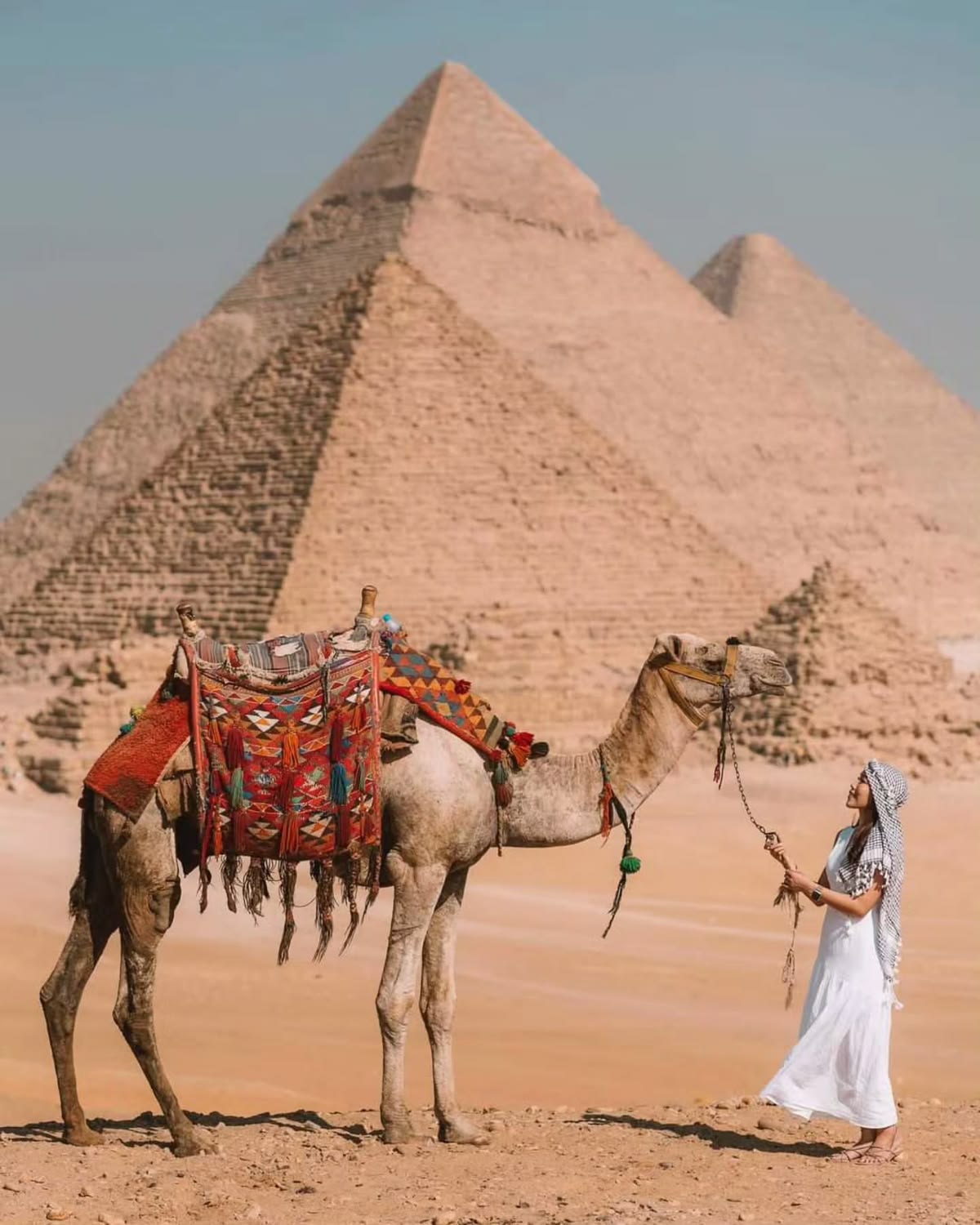
The Giza Plateau is located near Cairo. It is home to three famous pyramids.
They were built for three ancient Egyptian pharaohs:
- Khufu
- Khafre
- Menkaure
The Great Pyramid of Khufu is the largest of the three. It is also the most famous.
The Pyramid of Khafre is slightly smaller. However, it stands on higher ground. It also keeps some of its original limestone casing near the top.
The Pyramid of Menkaure is the smallest. Even so, it remains an impressive royal monument.
But why do these ancient buildings still fascinate us?
The answer is not only their size.
The pyramids tell us about ancient Egyptian religion, architecture, engineering, mathematics, and royal power. They also leave some questions unanswered.
This guide explores the Pyramids of Giza in simple and clear terms. It separates archaeological facts from popular myths. It also explains how travelers in Hurghada can plan a visit to Giza.
Quick Facts About the Pyramids of Giza
Here are the most important facts to know:
- The pyramids stand on the Giza Plateau near Cairo.
- They were built during Egypt’s 4th Dynasty.
- The Great Pyramid was built for Pharaoh Khufu.
- The second pyramid was built for Pharaoh Khafre.
- The third pyramid was built for Pharaoh Menkaure.
- The pyramids were part of larger funerary complexes.
- The Great Pyramid was originally covered with smooth limestone.
- The pyramids are around 4,500 years old.
- The Great Sphinx stands near the Pyramid of Khafre.
- Archaeological evidence shows that large organized workforces built the monuments.
- Modern researchers continue to study the Giza complex.
These facts give us a starting point.
However, the real story is much more interesting.
What Are the Pyramids of Giza?
The Pyramids of Giza are monumental royal tombs.
They were built during the Old Kingdom of ancient Egypt.
The main construction took place during the 4th Dynasty.
The pyramids were not isolated buildings.
Each one formed part of a larger complex.
These complexes could include temples, causeways, smaller pyramids, and other structures.
The purpose was connected with the death of the king and his journey into the afterlife.
Ancient Egyptians had complex beliefs about death.
They believed that existence continued after physical death.
Therefore, the burial of a king was extremely important.
The pyramid helped create a permanent setting for the royal funerary cult.
The Great Pyramid of Khufu
The Great Pyramid of Khufu is the largest pyramid at Giza.
It was built for Pharaoh Khufu.
Khufu ruled during Egypt’s 4th Dynasty.
The pyramid was originally about 146.6 meters high.
Today, it is shorter.
Why?
Much of its original outer casing has disappeared.
The Great Pyramid is famous for its enormous size.
It is also famous for its remarkable precision.
Its four sides are aligned very closely with the cardinal directions.
This shows that the builders had excellent surveying skills.
Inside the Great Pyramid
The Great Pyramid contains several important passages and chambers.
These include:
- The Descending Passage
- The Ascending Passage
- The Grand Gallery
- The Queen’s Chamber
- The King’s Chamber
- The Subterranean Chamber
The King’s Chamber is especially famous.
It is built mainly from granite.
A large stone sarcophagus is located inside.
The exact circumstances of Khufu’s burial are not fully known.
However, the archaeological context strongly supports the idea that the pyramid was built as his royal funerary monument.
The Pyramid of Khafre
The Pyramid of Khafre is the second-largest pyramid at Giza.
It often looks taller than the Great Pyramid.
There is a simple reason.
Khafre’s pyramid stands on higher ground.
It also retains some of its original limestone casing.
This casing is visible near the top.
It gives visitors an idea of how the pyramids once looked.
Originally, the outer surfaces were smooth.
They were not covered with the rough blocks that visitors see today.
The polished limestone would have reflected sunlight.
As a result, the pyramid would have looked bright and impressive from a great distance.
The Pyramid of Menkaure
The Pyramid of Menkaure is the smallest of the three main pyramids.
It was built for Pharaoh Menkaure.
Although it is smaller, it has several interesting features.
For example, parts of the complex used granite.
Granite is much harder than limestone.
Working with it required skill and careful planning.
The pyramid also belonged to a larger funerary complex.
This complex included temples and other structures.
Together, these remains help archaeologists understand royal burial practices during the Old Kingdom.
Why Did Ancient Egyptians Build Pyramids?
The main reason was religion.
Ancient Egyptians believed in life after death.
They also believed that the dead king had an important role in the afterlife.
The body needed protection.
Funerary rituals also needed a permanent setting.
The pyramid was part of this religious system.
It was not simply a giant tomb.
It was the central part of a royal funerary complex.
The surrounding temples and causeways had important functions too.
The Pyramid and the Afterlife
Ancient Egyptian religion included many ideas about the afterlife.
The king was not viewed as an ordinary person after death.
Royal burial had a religious and political meaning.
The pyramid helped express the power and permanence of the king.
Its enormous size also showed the strength of the Egyptian state.
Therefore, the pyramids had more than one meaning.
They were religious monuments.
They were also symbols of royal authority.
What Does the Pyramid Shape Mean?
The exact meaning of the pyramid shape is still discussed.
Several ideas exist.
One theory connects it with the primordial mound of creation.
Another connects it with the rays of the sun.
The shape may also have symbolized the king’s journey toward the heavens.
These ideas may have worked together.
Ancient Egyptian religion was complex.
It changed over time.
Different symbols could also have several meanings.
Therefore, it is better to avoid one simple explanation.
How Were the Pyramids Built?
This is one of the most popular questions about Giza.
The short answer is simple.
Ancient Egyptians used human labor, tools, transportation, planning, and engineering.
The exact construction process is more complicated.
There is no surviving document that explains every step.
However, archaeologists have discovered important evidence.
The builders had access to:
- Limestone quarries
- Granite
- Copper tools
- Wooden sledges
- Ropes
- Boats
- Construction ramps
- Surveying methods
- Organized labor
These resources allowed them to move and shape enormous quantities of stone.
Where Did the Stone Come From?
Much of the limestone came from nearby sources.
Other materials traveled much farther.
Granite, for example, came from southern Egypt.
The Nile played a major role.
Boats could carry heavy materials along the river.
After that, workers could move the materials over land.
This required careful planning.
It also required a large support system.
Workers needed food, water, tools, shelter, and transportation.
The pyramid was therefore a massive logistical project.
Who Built the Pyramids?
This question has created many myths.
One common story says that the pyramids were built entirely by slaves.
Archaeological evidence tells a different story.
Excavations near Giza have revealed evidence of worker settlements.
Researchers have found remains linked to food production and daily life.
They have discovered evidence of:
- Bakeries
- Workshops
- Storage areas
- Housing
- Animal processing
- Administrative activity
These discoveries show that the pyramid projects had organized workforces.
Skilled workers were important.
So were laborers, transport workers, food suppliers, and administrators.
Some workers may have worked seasonally.
This could have happened during periods when agricultural work was limited.
The construction was certainly difficult.
However, the evidence does not support the simple image of endless slave labor.
How Did Workers Move Heavy Stones?
The exact methods are still debated.
However, researchers have several strong possibilities.
Wooden sledges were likely used.
Teams of workers could pull stones across prepared surfaces.
Boats were important for long-distance transportation.
Ramps may also have helped workers raise stones.
Different ramp designs may have been used at different stages.
We should remember one important point.
Not every construction detail is known.
That does not mean the pyramids are impossible to explain.
Ancient Egyptians had practical engineering skills.
They also had time, resources, and a highly organized society.
Together, these factors made large construction projects possible.
Why Are the Pyramids So Precise?
The precision of the pyramids is one of their most impressive features.
The Great Pyramid is especially well aligned.
Its sides are positioned very close to the four cardinal directions.
This required accurate surveying.
Ancient Egyptians also had practical mathematical knowledge.
They could measure distances.
They could calculate areas.
They could work with proportions.
They could plan large structures.
Their mathematics was different from modern mathematics.
However, it was highly useful for construction.
The pyramids show what practical mathematics can achieve.
The Original Limestone Covering
The pyramids looked different thousands of years ago.
Today, visitors see rough stone blocks.
Originally, the pyramids had smooth outer surfaces.
Builders covered them with polished limestone.
The result was a clean and bright geometric shape.
The Great Pyramid would have reflected sunlight across the desert.
Over time, much of the casing disappeared.
Some stones were removed for later buildings.
Other stones were lost because of natural damage and centuries of human activity.
The remaining casing on Khafre’s pyramid helps us imagine the original appearance.
The Pyramids and Ancient Astronomy
Ancient Egyptians observed the sky carefully.
Stars had religious importance.
The sun was also central to Egyptian religion.
Astronomical observations could help with orientation and measurement.
The alignment of the pyramids is strong evidence of careful observation.
However, some modern theories go much further.
For example, some claims say that the pyramids prove contact with extraterrestrials.
There is no reliable archaeological evidence for this idea.
The achievements of ancient Egyptian civilization are impressive enough without adding unsupported explanations.
The Great Sphinx of Giza
The Great Sphinx is another famous monument at Giza.
It has the body of a lion and the head of a human.
The monument is associated with royal power.
Many researchers connect it with Pharaoh Khafre.
Its location near Khafre’s pyramid complex supports this interpretation.
The Sphinx has also inspired many alternative theories.
Some claim that it is thousands of years older than the pyramids.
These theories remain outside the mainstream archaeological interpretation.
Visitors should therefore separate speculation from established evidence.
The Sphinx is fascinating without needing exaggerated stories.
Pyramids of Giza: Myths vs Facts
The internet is full of pyramid stories.
Some are based on real history.
Others are modern speculation.
Here are several common examples.
Myth: Aliens Built the Pyramids
There is no credible archaeological evidence for this claim.
The ancient Egyptians had the tools and organization needed for monumental construction.
Myth: Modern Machines Were Necessary
Modern machines are not required to explain the construction.
Ancient builders could use sledges, ropes, boats, ramps, tools, and organized labor.
Myth: The Great Pyramid Was a Power Plant
This is a modern theory.
It is not supported by the archaeological context of the pyramid.
The evidence points to a royal funerary purpose.
Myth: Every Worker Was a Slave
The evidence suggests a more complex workforce.
Workers, craftsmen, administrators, and other specialists all contributed.
Myth: Nothing New Can Be Discovered
This is also incorrect.
Modern technology continues to reveal new information about ancient structures.
Researchers can now study hidden spaces and internal features with less physical intervention.
Modern Research at Giza
Archaeology has changed dramatically.
Researchers now have tools that were unavailable to earlier generations.
Modern studies can use:
- 3D scanning
- Digital mapping
- Remote sensing
- Structural analysis
- Non-invasive imaging
- Geological research
- Computer modeling
These methods help researchers study ancient buildings in greater detail.
They can also reduce the need for destructive investigation.
As a result, Giza remains an active archaeological research area.
The pyramids are ancient.
The research is not.
Why Are the Pyramids Archaeologically Important?
The Pyramids of Giza tell us about much more than pharaohs.
They provide evidence about ancient Egyptian society.
Researchers can study:
- Religion
- Architecture
- Engineering
- Mathematics
- Food production
- Transportation
- Labor organization
- Royal power
- Burial customs
- Administration
This makes Giza one of the most valuable archaeological sites in the world.
The pyramids are also important because they preserve evidence of human organization on a huge scale.
A monument this large could not be built without planning.
It required cooperation between many different groups.
Visiting the Pyramids From Hurghada
Many visitors choose Hurghada for a Red Sea holiday.
The city is famous for beaches and marine activities.
Popular experiences include:
- Snorkeling
- Diving
- Boat trips
- Island excursions
- Desert safaris
- Water sports
However, Hurghada can also be a starting point for cultural excursions.
A trip from Hurghada to Giza allows travelers to experience ancient Egyptian history during the same vacation.
How to Plan a Giza Trip From Hurghada
The journey to Cairo and Giza is long.
Therefore, preparation is important.
First, decide whether you prefer a group tour or a private excursion.
Next, check the transportation arrangements.
Then, review the attractions included in the itinerary.
A typical excursion may include:
- Transportation from Hurghada
- Giza Plateau
- Great Pyramid of Khufu
- Pyramid of Khafre
- Pyramid of Menkaure
- Great Sphinx
- Lunch
- Additional Cairo attractions, depending on the tour
Travelers comparing organized excursions can consider Best Tours Hurghada as one possible provider.
Always check the current itinerary before booking.
Tour details, entrance arrangements, and schedules can change.
Private or Group Tour From Hurghada?
Both options can work well.
A group tour is often convenient.
It gives travelers a structured itinerary.
It can also be a good choice for people who enjoy traveling with others.
A private tour offers more flexibility.
It can be useful for families and couples.
It may also suit travelers who want more time for photography.
Before choosing, compare:
- Transportation
- Duration
- Guide service
- Entrance fees
- Meals
- Number of attractions
- Group size
The cheapest option is not always the best option.
A long journey requires good organization.
What Should You Take to Giza?
A few simple items can make your visit easier.
Take:
- Comfortable shoes
- Drinking water
- Sunscreen
- Sunglasses
- A hat
- Light clothing
- A camera
- Necessary documents
- Some local currency
The Giza Plateau is open and sunny.
Therefore, protection from the sun is important.
Comfortable shoes are also useful.
You may walk quite a lot during the visit.
When Should You Visit the Pyramids?
Giza can be visited during different seasons.
However, Egypt can be very hot during summer.
Many travelers prefer cooler months.
Morning visits can also be comfortable.
An early start has another advantage.
It can help you avoid the strongest midday heat.
If you are traveling from Hurghada, an early departure is especially useful.
The journey is long.
Therefore, maximizing your time in Cairo and Giza can make the experience more rewarding.
Can You Visit Giza in One Day From Hurghada?
Yes.
A one-day excursion is possible.
However, it is a long day.
You will spend several hours traveling.
For this reason, travelers should choose an itinerary that matches their energy and schedule.
A well-organized tour can make the day easier.
Private transportation may also provide additional comfort and flexibility.
If you have more time, staying overnight in Cairo can create a slower experience.
You can then explore Giza without rushing back to Hurghada on the same day.
Combining the Pyramids With Other Egyptian Experiences
Egypt offers much more than the pyramids.
A holiday in Hurghada can include both nature and history.
For example, you can spend one day exploring the Red Sea.
Another day can be dedicated to Giza.
You can also consider a trip to Luxor.
This creates a diverse Egyptian holiday.
Hurghada and the Red Sea
Enjoy snorkeling and diving.
Explore coral reefs.
Take a boat to one of the nearby islands.
Relax on the beach.
Hurghada Desert Safari
Explore the Eastern Desert.
Ride a quad bike.
Watch the sunset.
Experience local traditions.
Enjoy a desert dinner.
Cairo and Giza
Visit the pyramids.
See the Great Sphinx.
Explore ancient Egyptian history.
Luxor
Discover ancient temples.
Visit the Valley of the Kings.
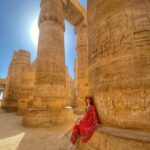
Explore Karnak Temple.
This combination lets travelers see several sides of Egypt.
Photography Tips for the Pyramids
The pyramids are perfect for photography.
You do not need professional equipment.
A smartphone can produce excellent photographs.
Try different angles.
Take a wide photograph first.
This shows the scale of the site.
Then capture smaller details.
The stone blocks can create interesting textures.
You can also photograph the pyramids with the surrounding desert and modern Cairo.
Morning and late afternoon can offer softer light.
Most importantly, remember to enjoy the experience.
A photograph is wonderful.
The memory of standing beside a 4,500-year-old monument is even better.
What Do We Still Not Know About Giza?
Archaeology has answered many questions.
Yet some mysteries remain.
Researchers still study:
- Construction techniques
- Ramp systems
- Internal spaces
- Building sequences
- Religious symbolism
- Ancient transportation
- Workforce organization
This is normal.
The pyramids were built thousands of years ago.
Many original documents have disappeared.
Some structures were changed over time.
Others were damaged.
Therefore, researchers must combine different types of evidence.
They study buildings.
They examine tools.
They analyze settlements.
They compare ancient texts.
They use modern technology.
Slowly, the picture becomes clearer.
Why the Pyramids Still Fascinate the World
The Pyramids of Giza are not famous only because they are old.
They are famous because they combine several extraordinary qualities.
They are enormous.
They are precise.
They are ancient.
They are connected with powerful religious beliefs.
They were created by a highly organized civilization.
They have survived for thousands of years.
Most importantly, they still make us curious.
The pyramids encourage questions.
They invite research.
They challenge our understanding of ancient engineering.
They also remind us of the abilities of people who lived thousands of years ago.
The real story is already remarkable.
There is no need to add aliens or imaginary technologies.
Ancient Egyptians achieved something extraordinary with human knowledge, organization, craftsmanship, and determination.
Why You Should Visit the Pyramids of Giza
Reading about the pyramids is interesting.
Seeing them in person is different.
The scale becomes easier to understand.
The stones look larger.
The desert feels wider.
The distance between the monuments becomes clearer.
You can also see how the pyramids relate to the Sphinx and the surrounding landscape.
For travelers staying in Hurghada, the journey offers another benefit.
It adds history to a Red Sea vacation.
You can enjoy the sea in Hurghada.
Then you can discover the ancient world in Giza.
A provider such as Best Tours Hurghada can be considered when looking for an organized excursion from Hurghada.
Before booking, compare the itinerary and included services.
Choose the option that best fits your travel style.
Frequently Asked Questions
How old are the Pyramids of Giza?
The main pyramids were built around 4,500 years ago during Egypt’s 4th Dynasty.
Who built the Great Pyramid?
The Great Pyramid was built for Pharaoh Khufu. An organized workforce of laborers and skilled specialists worked on the project.
Which Pyramid of Giza is the largest?
The Great Pyramid of Khufu is the largest of the three main pyramids.
Why does Khafre’s pyramid look taller?
Khafre’s pyramid stands on higher ground. It also retains some original casing near its top.
Were the pyramids built by slaves?
The evidence shows a more complex workforce. Organized laborers, skilled workers, and administrators contributed to the construction projects.
Did aliens build the Pyramids of Giza?
There is no credible archaeological evidence that aliens built the pyramids.
Can I visit the Pyramids from Hurghada?
Yes. Travelers can arrange group or private excursions from Hurghada to Cairo and Giza.
Is a Hurghada to Giza day trip worth it?
For travelers interested in Egyptian history, it can be an excellent experience. However, the journey is long, so travelers should prepare for a full day.
Can I see the Sphinx and pyramids on the same visit?
Yes. The Great Sphinx and the three main pyramids are located within the Giza archaeological area.
What should I wear to the pyramids?
Choose comfortable clothing and walking shoes. A hat, sunglasses, and sunscreen are also useful.
Final Thoughts
The Pyramids of Giza are one of the greatest achievements of ancient Egypt.
They are more than enormous stone monuments.
They are evidence of human skill.
They show the importance of religion and royal power in ancient Egypt.
They also demonstrate the ability of an organized society to complete enormous projects.
The Great Pyramid of Khufu remains the largest of the three.
Khafre’s pyramid stands proudly beside it.
Menkaure’s smaller pyramid completes the famous group.
Nearby, the Great Sphinx adds another layer to the ancient landscape.
Together, these monuments create one of the most impressive archaeological sites in the world.
For travelers staying in Hurghada, a trip to Giza can be a memorable addition to a Red Sea vacation.
You can enjoy snorkeling and beaches in Hurghada.
Then, you can travel to Cairo and stand before monuments that have survived for more than four millennia.
That contrast is part of what makes Egypt so special.
The pyramids also teach us something important.
Ancient people did not need modern technology to achieve remarkable results.
They used the knowledge, tools, materials, and skills available to them.
They planned carefully.
They worked together.
They solved difficult problems.
And they built monuments that still stand today.
That is why the Pyramids of Giza continue to fascinate the world.
Their greatest mystery is not whether aliens built them.
Their greatest story is what ancient human beings were able to accomplish.
SEO Settings
Focus Keyphrase: Pyramids of Giza
Secondary Keywords:
- Great Pyramid of Giza
- Pyramids of Giza Egypt
- Giza Pyramids
- history of the Pyramids of Giza
- visiting the Pyramids of Giza
- Hurghada to Giza
- Giza tour from Hurghada
- Egypt pyramids tour
- ancient Egyptian pyramids
SEO Title:
Pyramids of Giza: History, Secrets & Why They Fascinate the World
Slug:pyramids-of-giza-history-secrets
Meta Description:
Discover the Pyramids of Giza and their ancient history. Learn about Khufu, Khafre, Menkaure, construction, myths, secrets and visiting Giza from Hurghada.
Suggested H1:
The Pyramids of Giza – History, Secrets and Why They Still Fascinate the World