
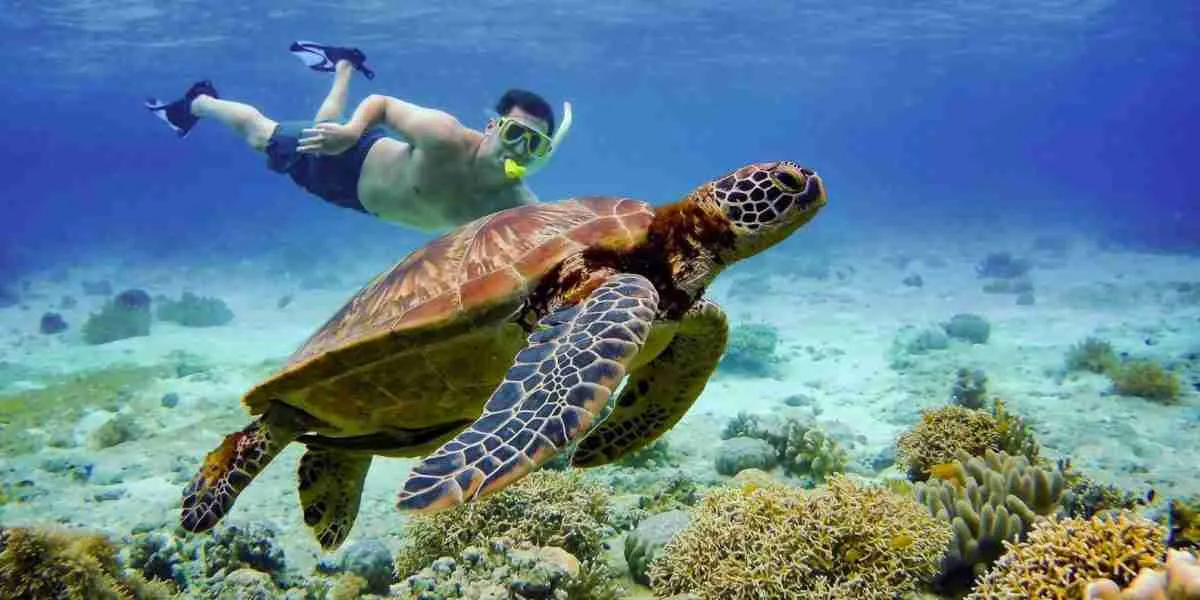
Seeing a sea turtle gliding calmly through the clear waters of the Red Sea can become one of the most memorable moments of a trip to Egypt. These ancient marine reptiles move gracefully between coral reefs, seagrass areas, sandy seabeds, and coastal waters, often appearing unexpectedly during a snorkeling or diving excursion.
For many travelers, the excitement begins the moment someone on the boat says, “There is a turtle!”
However, a sea turtle encounter should never be treated as a guaranteed attraction. Turtles are wild animals, not performers. They choose where to swim, where to feed, and when to surface. Their behavior can change according to weather, water conditions, food availability, human activity, and many other natural factors.
That is why responsible turtle watching is so important.
Travelers who understand how to behave around marine life can enjoy these encounters without disturbing the animals. Keeping a respectful distance, avoiding touching or feeding turtles, staying calm in the water, and taking photographs without chasing the animal are simple actions that make a meaningful difference.
Egypt’s Red Sea coast offers many opportunities to explore marine ecosystems, especially around Hurghada, Marsa Alam, Abu Dabbab, and other reef and seagrass areas. Yet the best experience is not necessarily the one where you get closest to a turtle. Instead, it is the one where you can observe a wild animal behaving naturally while leaving its environment undisturbed.
Why Are Sea Turtles So Special?
Sea turtles have existed for millions of years and play important roles in marine ecosystems. Several species can be found in the wider Red Sea region, with green turtles and hawksbill turtles among the species that travelers may encounter.
Green turtles are particularly associated with shallow coastal habitats and seagrass meadows, where they can feed. Hawksbill turtles are strongly associated with coral reef environments and have specialized diets that can include marine sponges.
Their ecological roles make them more than simply beautiful animals to photograph.
Turtles interact with marine habitats in ways that contribute to the health and balance of coastal ecosystems. Their presence can therefore tell us something about the condition and diversity of the marine environment.
For travelers, this creates an opportunity to move beyond simply taking a photograph.
A turtle encounter can become a lesson in responsible wildlife tourism.
Where Can Travelers See Sea Turtles in Egypt?
Egypt’s Red Sea coast contains a variety of marine habitats where turtles may be encountered. However, travelers should remember that seeing a turtle is never guaranteed, even in locations known for turtle activity.
Hurghada and the Surrounding Red Sea
Hurghada is one of Egypt’s most popular bases for Red Sea excursions. From the city, travelers can join snorkeling and boat trips to different reefs, islands, and coastal areas.
Some excursions may visit locations where marine turtles are occasionally seen.
The exact wildlife experience depends on the route, season, sea conditions, water visibility, and natural behavior of the animals.
This is an important point when choosing a tour. A responsible operator should present turtle sightings as a possibility rather than promising that travelers will definitely encounter one.
For visitors staying in Hurghada, a well-organized snorkeling excursion can provide an opportunity to explore several marine habitats during one day.
Companies such as Best Tours Hurghada can be considered when planning Red Sea excursions, but travelers should always check the specific itinerary, included activities, equipment, and current conditions before booking.
Abu Dabbab
Abu Dabbab, near Marsa Alam, is particularly well known among travelers interested in marine wildlife.
The area has shallow coastal waters and seagrass habitat that can attract green turtles. Depending on conditions, visitors may have opportunities to observe turtles feeding or moving through the water.
The shallow environment can make wildlife observation accessible to different types of travelers.
Nevertheless, even in a famous turtle area, nature remains unpredictable.
A turtle may be resting somewhere outside the usual viewing area. It may be feeding farther away from shore. It may move into deeper water. Or there may simply be no turtle visible during a particular visit.
This is not a failed excursion.
Wildlife tourism becomes more meaningful when visitors understand that animals are not obligated to appear on a schedule.
Marsa Mubarak
Marsa Mubarak is another Red Sea area associated with marine wildlife encounters.
The bay and surrounding waters can provide opportunities to observe turtles, rays, fish, and other marine species depending on local conditions.
The appeal of such an excursion is not limited to finding one particular animal.
The wider ecosystem is part of the experience.
A turtle swimming over a sandy seabed can be fascinating, but so can a healthy coral garden, a school of fish, or the changing colors of the reef.
Travelers who approach snorkeling with this broader perspective often enjoy the experience more because they are not constantly searching for one specific species.
Other Red Sea Reefs and Coastal Areas
Turtles can also be encountered in other parts of the Egyptian Red Sea.
They may pass through reef areas, shallow bays, seagrass habitats, and coastal waters.
The key point is that there is no single place where travelers can be guaranteed a turtle sighting.
Marine wildlife moves.
That is exactly what makes an encounter special.
Why Turtle Sightings Cannot Be Guaranteed
One of the most important things travelers should understand before booking a turtle excursion is that wildlife cannot be controlled.
A turtle is not an attraction waiting at a fixed location.
Even if turtles are regularly observed in a particular bay, several factors can influence whether one appears during a specific excursion.
These include:
- Water visibility
- Wind
- Waves
- Currents
- Time of day
- Season
- Feeding activity
- Natural movement
- Human activity
- Weather conditions
- The turtle’s individual behavior
For example, a turtle may spend part of the day feeding in a seagrass area and later move somewhere else.
A boat may arrive shortly after the turtle has left.
Another day may produce an unforgettable encounter within minutes.
Neither situation means that the excursion was better or worse.
It simply reflects the reality of wildlife.
Avoid Operators Who Promise Guaranteed Wildlife
Travelers should be cautious with marketing that guarantees specific wild animals.
Statements such as “100% turtle guaranteed” create unrealistic expectations and can encourage irresponsible behavior.
If visitors believe a turtle must appear because they paid for it, they may be more likely to chase animals or pressure guides to find one.
A responsible approach is very different.
The operator should explain that turtles may be encountered but cannot be guaranteed.
That sets realistic expectations and encourages respectful observation.
How to Behave When You See a Sea Turtle
The first rule is simple:
Stay calm.
Seeing a turtle can be exciting, especially when it suddenly swims close to the group. However, excitement should not turn into chasing.
If a turtle appears nearby, allow it to determine the distance.
Do not swim directly toward it.
Do not surround it.
Do not block its path.
Do not try to make it change direction for a photograph.
Instead, observe its movement and allow the turtle to continue its natural behavior.
Keep a Respectful Distance
Distance is one of the most important principles of wildlife observation.
If a turtle is swimming away from you, do not follow it closely.
If it changes direction because you are approaching, you may already be too close.
A useful rule is to think about whether the animal appears relaxed.
If the turtle continues feeding, swimming, or resting normally, you can observe from a respectful position.
If it suddenly moves away, dives, changes direction, or appears disturbed, increase your distance.
The goal is observation, not interaction.
Never Touch a Sea Turtle
Even if a turtle swims close enough to touch, do not reach out.
Touching wildlife can cause stress and may interfere with natural behavior.
It can also expose the animal to substances from human skin, sunscreen, or other contaminants.
There is another problem with touching.
One person touching a turtle can encourage others to do the same.
Soon, a peaceful wildlife encounter becomes a crowd of swimmers trying to interact with the animal.
Allowing the turtle to remain wild is always the better choice.
Do Not Feed Turtles
Feeding wild marine animals may seem harmless, but it can have negative consequences.
Animals may become accustomed to receiving food from humans. This can alter natural behavior and potentially encourage them to approach boats or swimmers.
It can also affect their natural diet.
A responsible wildlife encounter means allowing the turtle to find and consume its own food.
If you see someone feeding a turtle, do not copy the behavior.
Instead, follow the guidance of responsible guides and operators.
Snorkeling Etiquette Around Turtles
Good snorkeling etiquette benefits both travelers and wildlife.
Stay Calm in the Water
Sudden movements can frighten marine animals.
Move slowly and smoothly.
Avoid excessive kicking, shouting underwater, or splashing toward the turtle.
Keep Your Flippers Away From Coral
Coral reefs are fragile.
An inexperienced snorkeler can accidentally damage coral simply by kicking too close to the reef.
Maintain enough distance to control your movements.
If you are not confident with fins, practice in a safe area before approaching a reef.
Do Not Block the Turtle
A common mistake occurs when several swimmers position themselves around a turtle.
The animal may suddenly find itself surrounded.
Instead, leave an open path.
Think of the turtle as a traveler with somewhere to go.
You are visiting its environment, not the other way around.
Do Not Chase
If the turtle swims away, let it go.
This is especially important when several people are trying to follow it.
A turtle may need to surface for air or move toward a feeding area. Chasing it can interfere with these natural behaviors.
Photographing Sea Turtles Responsibly
For many travelers, seeing a turtle immediately creates the desire to take a photograph.
There is nothing wrong with photographing wildlife.
The important issue is how the photograph is taken.
Do Not Sacrifice Distance for a Better Photo
A slightly smaller turtle in a natural setting is a better wildlife photograph than a close-up image obtained by chasing or disturbing the animal.
Modern cameras and smartphones can capture good images from a respectful distance.
Underwater photographers should also avoid positioning themselves directly in the turtle’s path.
Instead, remain stationary when possible and allow the animal to pass naturally.
Avoid Touching for Photographs
Never hold a turtle, grab its shell, or attempt to guide it toward a camera.
A photograph is not worth disturbing an animal.
Avoid Blocking Its Route
If a turtle is heading toward the surface, do not swim in front of it.
If it is moving toward a feeding area, do not position yourself directly over its path.
Good wildlife photography requires patience.
Wait.
Observe.
Let the animal decide what happens next.
What About Selfies With Turtles?
Underwater selfies can be tempting, especially when a turtle swims nearby.
However, getting a selfie often encourages people to move closer than they normally would.
Instead of trying to place yourself next to the turtle, consider taking a photograph that includes the animal in its natural surroundings.
This can actually produce a more interesting image.
The turtle becomes part of the underwater landscape rather than a prop for a portrait.
Snorkeling With Children
Children can have unforgettable experiences when they see a sea turtle.
However, parents should explain the basic rules before entering the water.
Children should understand:
- Do not touch the turtle.
- Do not chase it.
- Do not feed it.
- Do not scream or splash toward it.
- Stay close to the responsible adult or guide.
- Follow the guide’s instructions.
If a child becomes overly excited, parents can encourage quiet observation.
Teaching children responsible wildlife behavior during a vacation can have an impact far beyond one snorkeling trip.
Turtle Encounters for Beginner Snorkelers
You do not need to be an expert snorkeler to appreciate a turtle encounter.
However, beginners should focus first on becoming comfortable in the water.
Practice breathing through the snorkel.
Learn how to clear your mask.
Understand how to use fins without kicking coral.
Most importantly, know when to stop.
If you become tired or uncomfortable, return to the boat or shallow area rather than continuing because you hope to see a turtle.
A relaxed snorkeler is also a more responsible wildlife observer.
What Should You Expect From a Turtle Excursion?
A good excursion is about more than the possibility of seeing one animal.
Expect to experience a marine environment.
You may see:
- Coral reefs
- Reef fish
- Sandy seabeds
- Seagrass areas
- Rays
- Different types of marine life
- Seabirds
- Coastal scenery
A turtle may be one highlight among many.
If you approach the trip with this mindset, you are less likely to become disappointed if the animal does not appear.
The Importance of Seagrass Habitats
Many travelers associate sea turtles primarily with coral reefs.
However, seagrass habitats can also be extremely important.
Green turtles may feed in shallow seagrass areas, making these habitats valuable for wildlife observation.
This is one reason travelers should not assume that the most colorful reef is always the best place to look for turtles.
A quiet shallow bay can sometimes be just as interesting.
The marine ecosystem is made up of different habitats, each supporting different forms of life.
Responsible Tourism and Marine Conservation
Responsible tourism begins before the boat leaves the harbor.
Travelers can ask questions about the operator’s approach to marine life.
For example:
- Does the company discourage touching animals?
- Does the guide explain snorkeling etiquette?
- Does the operator avoid feeding wildlife?
- Are guests told not to chase animals?
- Does the crew respect marine protected areas and local rules?
- Is environmental responsibility included in the briefing?
These questions can help travelers identify operators that take wildlife protection seriously.
The cheapest excursion is not necessarily the best value if it encourages harmful behavior.
Choosing a Responsible Tour Operator
When comparing Red Sea excursions, look beyond the promise of wildlife encounters.
A responsible operator should provide clear information about the itinerary and realistic expectations.
Travelers should check:
- Departure and return times
- Transfer arrangements
- Equipment availability
- Number of snorkeling stops
- Group size
- Safety procedures
- Food and drinks
- Whether a guide accompanies the snorkeling group
- Weather-related changes
- Environmental practices
For travelers staying in Hurghada, Best Tours Hurghada can be considered when researching snorkeling and Red Sea excursions. As with any tour provider, travelers should review the exact excursion details and current conditions before booking.
What to Pack for a Turtle-Watching Excursion
A little preparation can make the day much more comfortable.
Consider bringing:
- Swimwear
- Towel
- Reef-safe or environmentally considerate sun protection where appropriate
- Sunglasses
- Hat
- Reusable water bottle
- Waterproof bag
- Motion-sickness medication if recommended for you
- Underwater camera or waterproof phone case
- Light clothing for the return trip
Avoid taking unnecessary plastic packaging onto the boat.
Anything that comes with you should return with you unless it is designed to be safely disposed of.
Protect Yourself From the Sun
A day on the Red Sea can involve significant sun exposure.
The combination of bright sunlight, reflective water, and long periods outdoors can make travelers underestimate how quickly they can become sunburned.
Use appropriate sun protection and reapply it as needed.
A hat and lightweight clothing can also provide useful protection when you are not in the water.
Staying hydrated is equally important.
Do Not Leave Anything Behind
Marine environments are vulnerable to plastic waste and other debris.
A small piece of plastic can become a serious hazard for marine animals.
Keep all packaging, tissues, bottles, and other waste with you until it can be disposed of properly.
If you see litter in an appropriate situation where it can be safely collected without disturbing wildlife, removing it can be helpful.
However, never reach into coral or disturb marine animals in an attempt to collect something.
Respect Local Rules and Protected Areas
Some Red Sea marine areas have specific conservation rules.
These rules may regulate where boats can anchor, how visitors interact with wildlife, and where snorkeling or diving is permitted.
Travelers should follow instructions from guides and local authorities.
Rules can vary between locations, so it is better to ask than assume.
Responsible travel means recognizing that every destination has its own environmental priorities.
Why Responsible Turtle Tourism Matters
A turtle encounter can influence how travelers understand marine conservation.
When people see a wild turtle in its natural habitat, they may become more interested in protecting the ocean.
That positive connection is valuable.
However, tourism can also create pressure if visitors crowd animals, touch them, feed them, or repeatedly chase them.
The goal of responsible turtle tourism is therefore to create a balance.
People should be able to experience marine wildlife while animals retain the freedom to behave naturally.
Common Mistakes to Avoid
Some mistakes are easy to prevent.
Mistake 1: Chasing the Turtle
The turtle swims away, and the swimmer follows.
Better approach: Stop and observe from a distance.
Mistake 2: Touching the Shell
The turtle comes close, and the swimmer reaches out.
Better approach: Keep your hands to yourself and let the turtle pass.
Mistake 3: Feeding the Animal
Someone believes food will attract turtles.
Better approach: Never feed wild marine animals.
Mistake 4: Crowding
Several swimmers surround one turtle.
Better approach: Leave space and keep an open route.
Mistake 5: Focusing Only on the Turtle
Travelers spend the entire trip searching for one species.
Better approach: Appreciate the entire ecosystem.
Mistake 6: Ignoring the Guide
A guide gives instructions, but visitors continue independently.
Better approach: Follow the safety and wildlife guidance provided by the crew.
How to Make the Most of a Turtle Encounter
The best approach is surprisingly simple.
Slow down.
Instead of immediately swimming toward the turtle, take a moment to observe.
Where is it going?
Is it feeding?
Is it swimming toward the surface?
Is it resting?
Once you understand its behavior, you can position yourself without interfering.
Sometimes the best photograph happens when you do almost nothing.
The turtle swims into the frame.
You remain still.
The encounter happens naturally.
That is the essence of responsible wildlife photography.
Frequently Asked Questions About Sea Turtles in Egypt
Where is the best place to see sea turtles in Egypt?
Several Red Sea locations are known for turtle encounters, including areas around Abu Dabbab and Marsa Mubarak, as well as various coastal and reef habitats. However, no location can guarantee a turtle sighting because these are wild animals.
Can I touch a sea turtle if it swims close to me?
No. Even if a turtle approaches you, do not touch it. Maintain a respectful distance and allow the animal to decide where it wants to swim.
Can I feed a turtle?
No. Wild turtles should not be fed by visitors. Feeding can interfere with natural behavior and may create unhealthy associations between wildlife and humans.
Can children snorkel with sea turtles?
Children who are comfortable and capable in the water may enjoy snorkeling, but they should always be supervised appropriately. Parents should teach children not to touch, chase, surround, or feed turtles.
Are turtle sightings guaranteed on Red Sea tours?
No. Responsible operators should never guarantee encounters with wild turtles. Sightings depend on natural factors such as location, weather, visibility, currents, food availability, and animal behavior.
Can I take photos of sea turtles?
Yes, photography can be part of a responsible wildlife encounter. Keep a respectful distance, do not chase the turtle, do not block its path, and never touch or reposition the animal for a photograph.
What should I do if a turtle swims directly toward me?
Stay calm and avoid sudden movements. Allow the turtle to choose its own direction and do not reach out to touch it.
Are sea turtles dangerous?
Sea turtles generally do not seek conflict with people. The best approach is still to maintain distance and avoid touching or interfering with them.
What should I do if the turtle swims away?
Let it go. Do not chase it simply to get a better photograph or another close look. Its decision to leave is part of its natural behavior and should be respected.
Is snorkeling or diving better for seeing turtles?
Neither is automatically better. Snorkeling can provide excellent opportunities in shallow habitats, while diving may provide access to deeper environments. The best option depends on the location, conditions, and traveler’s experience.
Eco-Travel Tips for Your Egypt Trip
A turtle encounter is only one part of responsible travel.
You can make your entire Red Sea holiday more environmentally conscious by following a few simple principles.
Choose reusable items
Carry a reusable water bottle instead of buying multiple single-use plastic bottles.
Reduce waste
Take only what you need onto boats and keep your waste with you.
Respect coral reefs
Never stand on, touch, or collect coral.
Avoid collecting shells or marine life
A shell that looks like a souvenir may be part of an ecosystem.
Respect wildlife
Do not touch, feed, chase, or intentionally attract marine animals.
Choose responsible excursions
Look for operators that provide environmental guidance and prioritize safe wildlife encounters.
Support local businesses responsibly
Eating at local restaurants, buying appropriate local products, and choosing locally operated experiences can help distribute tourism benefits.
Learn before you go
Understanding basic marine etiquette before your excursion makes it easier to behave responsibly once you are in the water.
A Turtle Encounter Is a Privilege, Not a Performance
The most important lesson for travelers is simple:
A wild turtle does not exist for our entertainment.
It may be one of the most beautiful creatures you see during your Egyptian holiday, but it remains a wild animal with its own needs and behavior.
You may see it for ten seconds.
You may watch it for several minutes.
You may not see one at all.
All three outcomes are normal.
The quality of an excursion should not be measured only by whether someone managed to take a close-up photograph of a turtle.
Instead, consider the quality of the entire experience: the reef, the water, the fish, the landscape, the guide, the boat, and the opportunity to observe nature without disturbing it.
Final Thoughts
A sea turtle encounter in Egypt can be one of the highlights of a Red Sea holiday. From the waters around Hurghada to well-known marine habitats near Marsa Alam, travelers have opportunities to discover an underwater world filled with coral reefs, fish, seagrass habitats, and other forms of marine life.
But the most memorable encounter is not necessarily the closest one.
A responsible encounter is one where the turtle remains calm, continues its natural behavior, and moves freely through the water.
For travelers, that means keeping a respectful distance, avoiding touching and feeding, never chasing an animal, and following responsible snorkeling practices.
It also means accepting that sightings cannot be guaranteed.
Nature does not follow a timetable.
If a turtle appears, enjoy the moment. Observe quietly. Take photographs without disturbing it. Let it swim away when it chooses.
And if no turtle appears, remember that the Red Sea itself is the attraction.
Its coral gardens, fish, clear water, seagrass habitats, sandy seabeds, islands, and coastal landscapes are all part of the experience.
With thoughtful planning and an eco-conscious attitude, travelers can enjoy Egypt’s marine world while helping protect it for future visitors — and, most importantly, for the turtles themselves.