
There are places in Egypt where the sea is more than a backdrop for a beach holiday. Abu Dabbab Bay is one of them.
Located on the Red Sea coast near Marsa Alam, Abu Dabbab has become particularly famous for encounters with green sea turtles, shallow seagrass meadows, coral reefs and the possibility of seeing other fascinating marine species. What makes the bay especially interesting is the relationship between its different habitats: sandy shallows and seagrass provide feeding grounds for turtles, while coral formations around the bay create shelter and feeding opportunities for countless reef organisms.
For travelers who want to experience Egypt’s marine wildlife without necessarily becoming experienced divers, Abu Dabbab offers something unusually accessible. Snorkeling can bring visitors into the same underwater environment used by turtles and other animals, allowing them to observe wildlife in its natural habitat rather than behind glass or from a distance.
Scientific surveys have also demonstrated the importance of Abu Dabbab as a green turtle feeding ground. A study of the bay recorded 273 green turtle sightings across 42 surveys between 2011 and 2012, with an average of 6.5 sightings per survey. Researchers identified an extensive seagrass bed containing three documented seagrass species.
But Abu Dabbab is not simply a place to “find turtles.” It is an ecosystem, and understanding that ecosystem makes a visit much more meaningful.
Whether you are staying in Marsa Alam or considering an excursion from Hurghada, this is a marine wildlife experience where patience, respect and realistic expectations can make the difference between simply taking a photograph and genuinely connecting with the Red Sea.
What Makes Abu Dabbab Bay Special?
The first thing that distinguishes Abu Dabbab is its underwater geography.
Many Red Sea reefs are located immediately along rocky coastlines, while Abu Dabbab contains a broad sandy and seagrass area between sections of fringing reef. Researchers studying the bay describe it as a small coastal bay where the normal fringing reef is interrupted by an extensive seagrass meadow.
This apparently simple combination of habitats creates an unusually productive environment.
The seagrass is particularly important because it serves as a feeding habitat for green turtles. Instead of swimming continuously through open water, turtles can spend extended periods grazing in the meadow.
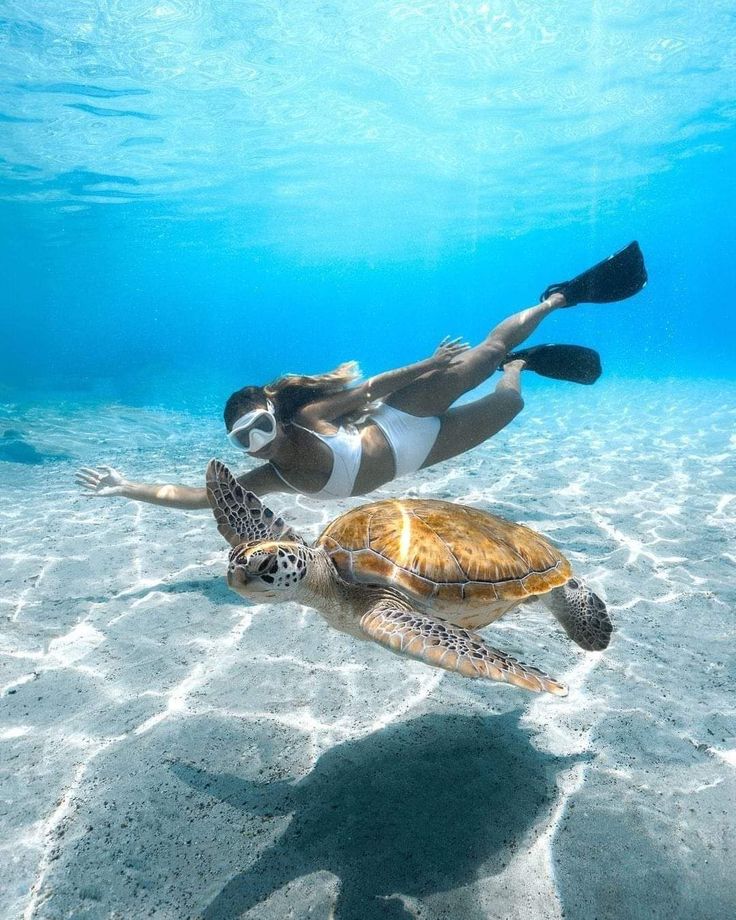
For visitors, this creates one of the most memorable wildlife experiences in the Egyptian Red Sea: quietly floating above a turtle while it feeds.
The surrounding reef adds another dimension. Once you move away from the sandy and seagrass-covered central areas, coral formations provide an entirely different underwater landscape filled with smaller fish, invertebrates and reef life.
This means a snorkeling session at Abu Dabbab can change character within a relatively short distance.
One moment you may be watching a large green turtle slowly feeding on seagrass. A few minutes later, you may find yourself looking at colorful reef fish moving through coral formations.
That combination is a major part of the bay’s appeal.
Green Sea Turtles: The Stars of Abu Dabbab
For many visitors, the main reason to visit Abu Dabbab Bay is simple: sea turtles.
Green turtles are particularly associated with seagrass feeding grounds in the Marsa Alam region. Local marine specialists describe Abu Dabbab and nearby Marsa Mubarak as important locations for resident green turtles.
The experience can be remarkably peaceful.
A turtle may be slowly grazing across the seagrass, periodically lifting its head before returning to feeding. Unlike fast-moving dolphins or fish, turtles often allow observers to appreciate their behavior over a longer period.
That is precisely why visitors should resist the temptation to chase them.
The best encounter is usually the one in which the human remains relatively passive.
Instead of swimming directly toward a turtle, stay at a respectful distance and allow the animal to continue behaving naturally. If it changes direction because you approach, you are probably too close.
A turtle may also need to surface to breathe. Never position yourself directly above or in front of an animal in a way that prevents it from reaching the surface.
The goal is not to make a turtle interact with you.
The goal is to observe what the turtle was already doing.
Why Green Turtles Need Seagrass
The importance of Abu Dabbab is easier to understand when you look beneath the surface.
Seagrass meadows are productive marine habitats. They provide feeding areas for herbivorous species such as green turtles and also contribute to the broader ecological structure of coastal environments.
The scientific study of Abu Dabbab identified three seagrass species in the bay: Halodule uninervis, Halophila stipulacea and Halophila ovalis.
So when visitors look at a seemingly simple underwater meadow, they are actually looking at a critical part of the local food web.
This is one reason why standing, walking or anchoring carelessly on seagrass can be harmful.
The habitat that makes Abu Dabbab attractive to wildlife is also the habitat visitors need to protect.
Beyond Turtles: The Coral Reef Environment
It would be a mistake to think of Abu Dabbab as only a turtle destination.
The bay also contains coral reef habitats along its sides, creating a completely different underwater environment from the central seagrass meadow.
Coral reefs are among the most visually complex ecosystems in the Red Sea. Hard corals create structures in which fish and other organisms can shelter, feed and reproduce.
During snorkeling, visitors can encounter schools of small reef fish, individual colorful species moving between corals and a wide variety of smaller marine organisms.
The experience is particularly interesting when you compare the two environments.
Seagrass Meadow
The seagrass area is relatively open and sandy.
It is where you look for larger animals such as green turtles feeding close to the bottom.
The scenery may appear calmer and less colorful at first glance, but it has a very different ecological importance.
Coral Reef
The reef is structurally complex.
Instead of looking primarily for one large animal, you begin noticing dozens of small movements: fish entering holes, groups changing direction, tiny creatures hiding among coral structures and different colors appearing as sunlight reaches the reef.
This is where snorkeling becomes less about finding a single “star” and more about understanding the ecosystem.
A good Abu Dabbab experience therefore combines both.
Look for turtles in the seagrass, but don’t rush away from the reef once you have seen one.
The reef is part of the story.
Snorkeling in Abu Dabbab Bay
One of the biggest advantages of Abu Dabbab is that you do not necessarily need scuba-diving certification to enjoy its marine environment.
Snorkeling allows visitors to remain close to the surface while observing the shallow coastal habitats.
Local diving and snorkeling information describes Abu Dabbab as a shallow turtle-and-seagrass location that is particularly suitable for snorkelers.
For beginners, this can be reassuring.
You do not need to master complicated diving equipment to appreciate the area. A mask, snorkel and fins can be enough to open up an underwater world that would otherwise remain invisible from the beach.
What Does Snorkeling Feel Like?
The first impression is usually the change in perspective.
From the beach, the Red Sea can look like an uninterrupted blue surface.
Once you put your face underwater, that surface disappears.
The sandy bottom becomes visible. Seagrass moves gently with the water. Small fish appear and disappear. Coral formations become more detailed. Then, if you are lucky, the outline of a large turtle may emerge below you.
The experience is less dramatic than a high-adrenaline water sport.
And that is exactly why many people love it.
Abu Dabbab is about slowing down.
You float.
You watch.
You wait.
And the wildlife determines what happens next.
What to Expect on an Abu Dabbab Day Trip
An Abu Dabbab excursion can vary depending on where you are staying and which tour operator you choose, but the general experience revolves around spending substantial time at the bay rather than moving rapidly between many attractions.
Travelers should expect transportation to the coast, time on the beach, snorkeling opportunities and time to explore the marine environment.
If departing from Hurghada, the journey is considerably longer than a typical local Hurghada snorkeling trip. That is important when planning your day.
You are not simply booking another short boat excursion.
You are committing a significant portion of your day to reaching a different part of the Red Sea coast.
The reward is access to a marine environment with a particularly strong reputation for turtle encounters.
Best Tours Hurghada, for example, lists a VIP Private Trip to Turtle Beach in Marsa Alam among its excursions, making Abu Dabbab-style wildlife experiences relevant for travelers who are staying in Hurghada but want to explore farther south.
A Typical Day May Include
Depending on the specific package, travelers can expect some combination of:
- Hotel pickup and transportation
- Arrival at Abu Dabbab Bay
- Time on the beach
- Snorkeling equipment
- Guided snorkeling or wildlife orientation
- Time searching for sea turtles
- Reef exploration
- Breaks for food and refreshments
- Free time before returning to the hotel
Always check the exact itinerary before booking because inclusions, transportation arrangements and schedules can vary.
Will You Definitely See a Sea Turtle?
This is one of the most important questions to ask before visiting.
The honest answer is no wildlife encounter can be guaranteed.
Abu Dabbab has documented green turtle feeding activity and is well known for turtle encounters, but wild animals do not operate according to a tourist timetable.
A turtle may be feeding in one part of the bay.
It may move elsewhere.
Weather and water conditions may affect visibility.
Crowding and human activity can influence where animals spend time.
Even a location with a strong reputation for wildlife should never be marketed as a guaranteed animal encounter.
Scientific research reinforces the fact that turtle numbers can vary. In the study mentioned earlier, researchers recorded an average of 6.5 green turtle sightings per survey, but the range extended from zero to 13 sightings on individual surveys.
That is an excellent reminder that nature is unpredictable.
Go to Abu Dabbab expecting a beautiful marine environment.
Treat seeing a turtle as a privilege rather than a promise.
What About Dugongs?
The dugong, sometimes called the “sea cow,” is another species strongly associated with the wider Marsa Alam marine environment.
Abu Dabbab is frequently mentioned in connection with dugong sightings, but visitors should be particularly careful about expectations.
Dugong encounters are far less predictable than turtle encounters.
A recent comparison of Abu Dabbab and Marsa Mubarak describes both as important seagrass wildlife locations but emphasizes that neither can guarantee a dugong sighting.
This distinction matters.
A responsible tour should never encourage guests to chase or surround a dugong simply to obtain a photograph.
If a dugong appears, enjoy the moment from an appropriate distance.
If it does not appear, the trip has not failed.
The turtles, coral reefs, fish and seagrass ecosystem remain valuable experiences on their own.
Abu Dabbab Compared With Other Red Sea Wildlife Excursions
Abu Dabbab is best understood by comparing it with other wildlife experiences.
Abu Dabbab vs. Marsa Mubarak
Both destinations are strongly associated with seagrass habitats, green turtles and the possibility of encountering dugongs.
The major difference is the style of experience.
Abu Dabbab is particularly attractive because of its accessible beach-based environment. Visitors can enter from the shore and reach the wildlife habitat without necessarily relying on a boat-based excursion.
Marsa Mubarak, by contrast, is commonly experienced as a boat excursion.
For travelers who want simple access and the possibility of spending time on a beach as well as snorkeling, Abu Dabbab has a strong advantage.
For those who enjoy boat-based wildlife exploration, Marsa Mubarak may provide a different atmosphere.
Abu Dabbab vs. Dolphin House
Dolphin-focused excursions have a different objective.
At sites such as Dolphin House, the main attraction is the possibility of encountering dolphins in their natural environment.
That creates a more active wildlife-search experience.
Abu Dabbab is slower.
The emphasis is on the seagrass meadow, turtles and reef environment.
If your dream is to watch dolphins moving rapidly through open water, a dolphin-focused trip may be more appropriate.
If you want to spend time quietly observing a large herbivorous marine animal feeding, Abu Dabbab is more distinctive.
Abu Dabbab vs. Sataya
Sataya and the Fury Shoals are known for dolphin encounters and remote offshore environments.
They can provide a stronger sense of expedition and open-sea adventure.
Abu Dabbab is more accessible and less dependent on a long boat journey.
This makes it particularly appealing to families, first-time snorkelers and travelers whose main goal is to see turtles.
Abu Dabbab vs. a Traditional Reef Snorkeling Trip
A standard Red Sea snorkeling excursion may visit one or several coral reefs.
The main attraction is often colorful fish, coral formations and underwater scenery.
Abu Dabbab offers those reef experiences too, but its identity is different because of the relationship between reef and seagrass.
If your priority is colorful coral and reef photography, another dedicated reef site may be equally or more attractive.
If your priority is marine wildlife, especially green turtles, Abu Dabbab becomes much more compelling.
Responsible Wildlife Tourism at Abu Dabbab
The most important part of visiting Abu Dabbab is not knowing how to find a turtle.
It is knowing how to behave when you find one.
Never Touch a Turtle
Even if a turtle seems calm, do not touch it.
Touching can cause stress and may alter natural behavior.
A wild animal is not a pet simply because it appears accustomed to people.
Never Ride a Turtle
Riding marine animals is harmful and should never be considered entertainment.
The same principle applies to holding, grabbing or deliberately blocking an animal.
Keep Your Distance
Approach slowly and calmly, if at all.
Better still, allow the turtle to decide how close it wants to come.
Local marine guidance recommends maintaining distance, avoiding the animal’s route to the surface and never touching or riding turtles.
Never Block the Surface
Sea turtles are reptiles and need to breathe air.
A turtle that is resting or feeding underwater may suddenly swim toward the surface.
Do not position yourself above it.
Do not create a human wall around it.
Give it a clear path.
Do Not Stand on Coral
Coral may look like rock, but living coral is fragile.
One careless step can break structures that took years or decades to develop.
If you are snorkeling, maintain good buoyancy and keep your fins away from the reef.
Do Not Touch Coral
Even gentle contact can damage living organisms.
The best underwater rule is simple:
Look, don’t touch.
Avoid Feeding Wildlife
Feeding animals can alter natural behavior and may make them dependent on human activity.
Wildlife tourism should allow animals to remain wild.
Choose Responsible Operators
A good tour operator should prioritize safety and conservation rather than promising impossible wildlife guarantees.
Look for operators that provide clear wildlife guidelines, discourage touching animals and avoid encouraging guests to chase marine life.
The Abu Dabbab area itself promotes environmental awareness initiatives including marine biology briefings, reef-friendly diving practices, turtle monitoring and conservation activities.
Why Responsible Tourism Matters
Sea turtles are not simply attractive subjects for underwater photography.
They are part of a much larger marine ecosystem.
The historical scientific literature on Egyptian Red Sea turtles identifies several turtle species occurring in Egyptian waters and highlights pressures affecting marine turtle populations and their habitats.
That makes responsible tourism particularly important.
When thousands of visitors enter the same marine environment, individual actions can add up.
One person touching a turtle may seem insignificant.
One person stepping on coral may seem insignificant.
One plastic bottle may seem insignificant.
But repeated across many visitors and many years, those behaviors can have consequences.
Responsible tourism reverses that equation.
Every visitor can become part of the protection effort by causing as little disturbance as possible.
Practical Tips for Your Abu Dabbab Trip
1. Bring Reef-Friendly Sun Protection
You will spend considerable time outdoors, so sun protection is essential.
Consider using reef-conscious products and combine sunscreen with physical protection such as a rash guard, hat and UV-protective clothing.
2. Bring a Reusable Water Bottle
Reducing single-use plastic is a simple way to make your excursion more environmentally responsible.
3. Use a Dry Bag
A small waterproof bag is useful for phones, cameras, documents and other valuables.
4. Bring an Underwater Camera
If you want photographs, an underwater camera or waterproof phone case can capture the experience without needing to disturb the animals.
Remember that the best wildlife photograph is usually the one taken while maintaining a respectful distance.
5. Wear Comfortable Swimwear
You may spend several hours between the beach and water, so comfortable swimwear and a lightweight cover-up are practical.
6. Consider a Rash Guard
A rash guard protects against sun exposure and can also reduce the temptation to apply excessive sunscreen immediately before entering the water.
7. Bring Fins if You Have Them
Good fins make snorkeling more efficient, particularly when you need to move gently without excessive kicking.
8. Follow the Guide’s Instructions
If your excursion includes a marine guide, listen carefully to the briefing.
The guide may know where wildlife has recently been observed and can explain local safety requirements.
9. Don’t Chase Wildlife
This deserves repeating.
If a turtle swims away, let it go.
The purpose of wildlife tourism is observation, not pursuit.
10. Be Patient
Wildlife encounters reward patience.
Instead of constantly swimming around looking for something spectacular, slow down and observe.
You may discover far more than you expected.
Abu Dabbab for Families
Abu Dabbab can be particularly attractive to families because snorkeling does not require scuba certification and the bay includes relatively shallow areas.
Local snorkeling information describes the Marsa Alam region’s shallow bays and reef areas as suitable for beginners and families, although conditions can vary and children should always be supervised appropriately.
For children, the experience can also become educational.
Instead of simply saying “Look, a turtle!”, parents can explain:
- Why turtles need seagrass
- Why they must breathe at the surface
- Why coral should never be touched
- How fish depend on reef habitats
- Why plastic pollution is dangerous
- Why wild animals should not be fed
That turns a beach excursion into a real marine biology lesson.
Abu Dabbab for Photographers
For underwater photographers, the bay offers two very different subjects.
The first is the turtle.
A large green turtle against blue water or seagrass can create a powerful image because of its size, movement and distinctive shape.
The second subject is the ecosystem itself.
Instead of filling every frame with a turtle, photograph the relationship between the turtle and its habitat.
A turtle feeding over seagrass tells a more interesting story than a close-up portrait alone.
Likewise, coral reef photographs can show the contrast between the open seagrass meadow and the structured reef environment.
Photography Etiquette
Keep your camera movements slow.
Do not block the turtle.
Do not swim backward into coral while looking through your screen.
Do not repeatedly approach an animal to obtain a closer photograph.
And never sacrifice responsible behavior for a better picture.
A slightly distant photograph of a relaxed turtle is better than a technically perfect image that was obtained by stressing the animal.
When Is the Best Time to Visit Abu Dabbab?
Abu Dabbab can be visited throughout the year, but the quality of a snorkeling experience depends on several factors, including weather, sea conditions, water clarity and seasonal conditions.
Rather than choosing a date solely because someone promises “perfect turtle weather,” check the expected conditions close to your travel date.
Water temperature is another consideration.
Some travelers love warm summer water, while others prefer the milder air temperatures of spring or autumn.
If you are particularly sensitive to cooler water, a lightweight wetsuit can make longer snorkeling sessions much more comfortable.
The key point is that there is no single date that guarantees the perfect wildlife encounter.
Nature does not work that way.
What Should You Pack?
A practical Abu Dabbab day-trip checklist includes:
- Swimwear
- Towel
- Sunglasses
- Hat
- Reef-conscious sunscreen
- Reusable water bottle
- Waterproof phone case or underwater camera
- Dry bag
- Comfortable sandals
- Rash guard or UV shirt
- Light cover-up
- Motion-sickness medication if you are prone to travel sickness
- Small amount of cash for personal expenses, where appropriate
If snorkeling equipment is included in your excursion, you may not need to bring your own mask and fins.
However, travelers who regularly snorkel may prefer their own equipment for comfort and fit.
Is Abu Dabbab Worth the Long Journey From Hurghada?
For someone staying in Hurghada, the answer depends on what you want from your Red Sea holiday.
If your priority is a short, easy snorkeling trip close to Hurghada, there are plenty of options that require less travel.
But if your main goal is marine wildlife, particularly green turtles, traveling farther south can make sense.
Abu Dabbab is not simply another beach.
It offers a different ecological experience.
The scientific importance of its seagrass habitat, combined with documented green turtle presence, gives the destination a distinctive identity.
For travelers who are willing to spend more time on the road in exchange for a wildlife-focused experience, it can be one of the most memorable additions to a Red Sea vacation.
Best Tours Hurghada currently promotes a private Turtle Beach trip in Marsa Alam, giving travelers based in Hurghada an option for visiting the southern Red Sea coast as part of a dedicated excursion.
The advantage of a private format can be greater flexibility, particularly for travelers who prefer a less rushed day or are traveling with family or a small group.
What Makes Abu Dabbab Different?
The real magic of Abu Dabbab is not one animal.
It is the interaction between habitats.
There is the beach.
There is the sandy bottom.
There is the seagrass.
There are the coral reefs.
There are fish moving through the shallows.
And there are sea turtles using the bay as a feeding environment.
That combination creates an experience that feels more like entering a living ecosystem than visiting a conventional tourist attraction.
It also changes the way you think about the Red Sea.
The most impressive part of the sea is not necessarily the brightest coral or the biggest fish.
Sometimes it is watching a turtle quietly feed in a seagrass meadow while the sunlight moves across the shallow water.
That is the kind of moment that stays with travelers.
Frequently Asked Questions About Abu Dabbab Bay
Is Abu Dabbab Bay famous for sea turtles?
Yes. Abu Dabbab is particularly well known for green turtle encounters, and scientific research has documented green turtle use of the bay’s seagrass habitat.
Can beginners snorkel at Abu Dabbab?
Yes. The bay’s shallow marine environment makes it suitable for many beginner snorkelers, although every swimmer should follow local safety instructions and assess sea conditions.
Can I guarantee seeing a turtle?
No. Abu Dabbab has a strong reputation for turtle sightings, but turtles are wild animals. Scientific surveys have recorded variation in sightings, including surveys in which no turtles were observed.
Can I swim with turtles?
You can snorkel in the same environment as turtles, but you should observe them responsibly rather than chase, touch or surround them.
Can I touch a sea turtle?
No. Do not touch, grab or ride a turtle. Maintain a respectful distance and allow the animal to move freely.
Are there dugongs at Abu Dabbab?
Dugongs are associated with the seagrass habitats of the wider Marsa Alam area, and Abu Dabbab is sometimes associated with sightings. However, dugong encounters are unpredictable and should never be guaranteed.
Is Abu Dabbab better than a dolphin trip?
It depends on your priority. Abu Dabbab is particularly suited to travelers interested in turtles and seagrass habitats, while dolphin-focused excursions are better for travelers whose main goal is observing dolphins.
Is Abu Dabbab good for underwater photography?
Yes. Turtles, seagrass and coral reefs offer several photography opportunities. The most important rule is to photograph without chasing or disturbing wildlife.
What should I bring to Abu Dabbab?
Bring swimwear, towel, sun protection, water, a waterproof camera or phone case, comfortable footwear and snorkeling equipment if it is not included in your tour.
How long should I spend at Abu Dabbab?
A full-day excursion is useful for travelers coming from farther away because it allows enough time for transportation, snorkeling, wildlife observation, relaxation and breaks rather than turning the visit into a rushed stop.
Is Abu Dabbab only for divers?
No. Snorkeling is one of the main ways visitors experience the bay, and you do not need scuba-diving certification to enjoy its shallow marine habitats.
Final Thoughts: Experience the Wildlife, Don’t Chase It
Abu Dabbab Bay represents one of the most interesting forms of Red Sea tourism: wildlife tourism based on observation rather than entertainment.
The attraction is not an artificial show.
There are no guarantees that a turtle will appear exactly when you enter the water.
There is no promise that a dugong will swim past your camera.
Instead, there is a real ecosystem waiting beneath the surface.
Green turtles feed in seagrass.
Fish move through coral.
The reef provides shelter and structure.
The sandy bottom connects these habitats.
And visitors have the opportunity to observe it all.
That is what makes Abu Dabbab special.
If you visit, resist the urge to make the wildlife perform for you. Swim calmly. Keep your distance. Never touch the animals. Protect the coral and seagrass. Listen to your guide. Take photographs without chasing your subjects.
In return, you may experience one of the most memorable encounters the Egyptian Red Sea can offer: floating quietly above a wild sea turtle as it feeds beneath the turquoise water.
For travelers staying in Hurghada and looking for a marine wildlife experience beyond the city’s more familiar snorkeling and island excursions, a dedicated trip toward Abu Dabbab can be an excellent way to discover another side of Egypt’s Red Sea coast. Best Tours Hurghada offers excursion options connecting travelers with experiences across Egypt, including a private Turtle Beach trip in the Marsa Alam area.
The most important souvenir, however, should not be a photograph.
It should be the understanding that these animals and habitats are worth protecting long after the holiday ends.