Egypt is one of the most exciting destinations in the world for photography.
Few countries offer such a wide range of subjects in one trip. You can photograph ancient pyramids at sunrise, monumental temples in warm evening light, golden desert landscapes, traditional boats on the Nile, colorful markets, and crystal-clear Red Sea waters.
For photographers, Egypt is not just about famous landmarks.
It is also about contrast.
Ancient stone stands beside modern cities. Desert landscapes meet tropical-looking beaches. Traditional fishing boats share the water with modern excursion boats. Huge monuments rise from dry landscapes, while coral reefs below the Red Sea surface create a completely different world.
Whether you use a professional mirrorless camera, a DSLR, a compact camera, or simply a smartphone, Egypt offers countless opportunities for memorable photographs.
This guide explains how to photograph Egypt effectively and responsibly. It covers the pyramids, the Sphinx, temples, desert landscapes, the Red Sea, islands, boats, wildlife, sunrise, sunset, and practical photography advice.
It also explains how to photograph people respectfully and protect fragile cultural and natural environments.
Why Egypt Is a Dream Destination for Photographers
Egypt offers an unusual combination of history, nature, architecture, and culture.
A single trip can include:
- Ancient pyramids
- Temples and tombs
- Desert landscapes
- The Nile River
- Traditional boats
- Red Sea coral reefs
- Tropical-looking islands
- Marine wildlife
- Local markets
- Historic streets
- Sunrises and sunsets
- Modern Egyptian life
This variety makes Egypt especially attractive for photographers who enjoy changing subjects.
Landscape photographers can focus on deserts and coastlines.
Architecture photographers can explore temples and ancient monuments.
Underwater photographers can photograph coral reefs and marine life.
Street photographers can capture everyday scenes in Egyptian cities.
Travel photographers can combine all these elements into one visual story.
Photography at the Pyramids of Giza
The Pyramids of Giza are among the most recognizable monuments on Earth.
That creates both an advantage and a challenge.
The advantage is obvious: the pyramids are incredibly photogenic.
The challenge is creating photographs that look different from millions of existing images.
Photograph the Pyramids at Sunrise
Early morning can provide beautiful light.
The sun is lower in the sky, shadows are longer, and the atmosphere can feel calmer.
If conditions are suitable, sunrise can also produce soft golden tones on the limestone.
Try arriving early rather than waiting until the middle of the day.
Morning light can create more depth across the pyramid surfaces.
Try Different Perspectives
Do not photograph the pyramid from only one position.
Move around.
Try:
- Low-angle compositions
- Wide-angle views
- Side perspectives
- Close details
- Silhouettes
- Layered compositions
- Framed compositions
You can also use foreground objects to create depth.
A person walking in the distance, a camel, a wall, or a desert path can become part of the composition.
Photograph the Great Pyramid as a Detail
You do not always need to photograph the entire pyramid.
Look closely at the limestone blocks.
Their texture can create interesting abstract photographs.
Try photographing patterns, shadows, surfaces, and small architectural details.
This approach can produce images that feel very different from typical tourist photographs.
How to Photograph the Great Sphinx
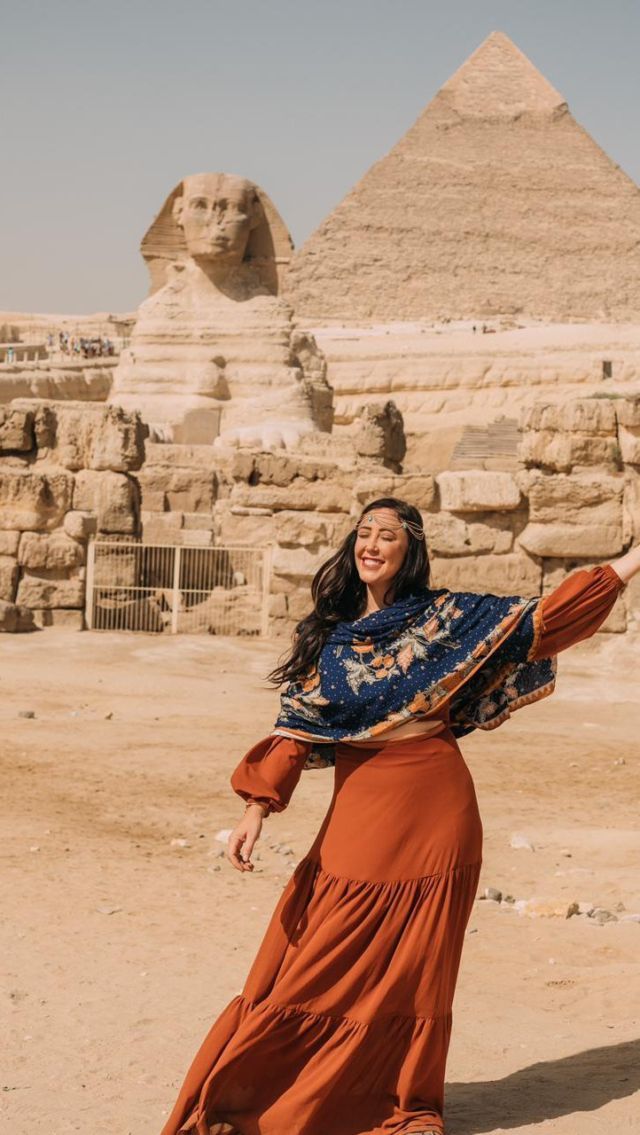
The Great Sphinx is one of the most famous symbols of Egypt.
Its combination of a lion’s body and human head creates a strong photographic subject.
Use the Surrounding Landscape
Instead of photographing only the face, include part of the surrounding landscape.
This helps communicate the scale and location of the monument.
Try a Close-Up
A close-up of the Sphinx can emphasize:
- Facial details
- Stone texture
- Weathering
- Royal headgear
- Shadows
Longer focal lengths can help isolate the monument from surrounding distractions.
Watch the Light
Strong midday sunlight can create very harsh shadows.
Morning or late afternoon often provides more attractive light.
However, even strong sunlight can work creatively if you use shadows deliberately.
Photography at Egyptian Temples
Egyptian temples offer some of the best architectural photography opportunities in the country.
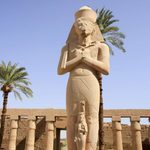
Places such as Karnak, Luxor Temple, and the Temple of Hatshepsut contain enormous columns, statues, reliefs, hieroglyphs, courtyards, and dramatic entrances.
Photograph Temple Columns
Columns create natural leading lines.
Stand between them and use their repetition to guide the viewer’s eye through the frame.
At Karnak, the Great Hypostyle Hall provides an especially powerful subject.
Try both vertical and horizontal compositions.
Look for Symmetry
Ancient Egyptian architecture often contains strong symmetry.
A centered photograph can emphasize the monumental design.
Try positioning yourself along the central axis of a temple entrance, courtyard, or processional path.
Photograph Details
Do not spend your entire visit taking wide photographs.
Look for:
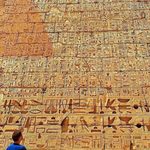
- Hieroglyphs
- Royal cartouches
- Carved faces
- Animal figures
- Column capitals
- Statues
- Reliefs
- Doorways
- Textures
- Ancient colors
A series combining wide architectural photographs with close details can tell a much stronger story.
Photography at Karnak Temple
Karnak is a paradise for architectural photographers.
The complex developed over many centuries and contains enormous pylons, columns, statues, obelisks, and decorated walls.
Use the Great Hypostyle Hall
The Great Hypostyle Hall is one of the most recognizable spaces at Karnak.
Its huge columns create strong vertical lines.
Try photographing from a low position to emphasize their height.
You can also use people as scale references, provided you photograph them appropriately and respectfully.
Look for Light and Shadow
Sunlight entering between columns can create dramatic contrasts.
Instead of trying to avoid shadows completely, use them as part of your composition.
Photography at Luxor Temple
Luxor Temple is particularly beautiful in changing light.
Its statues, columns, courtyards, and monumental entrance provide numerous compositions.
Late afternoon can produce warm light across the stone.
After dark, artificial lighting can create another visual atmosphere.
If night photography is permitted during your visit, use a stable shooting position and experiment with longer exposures.
Photography at Hatshepsut Temple
The Temple of Hatshepsut offers a different photographic experience.
The terraces and colonnades are set against dramatic cliffs.
This creates an excellent opportunity for architectural and landscape photography.
Try to include the cliffs behind the temple.
They provide scale and make the composition more dramatic.
A wide-angle lens can be useful for showing the relationship between the architecture and the surrounding landscape.
Desert Photography in Egypt
Egypt’s desert is one of the country’s most powerful photographic environments.
The desert may look empty at first.
But changing light can completely transform it.
Golden Hour in the Desert
The hour around sunrise and sunset can produce long shadows across dunes and rocky landscapes.
Sand can take on warm tones.
Small ridges become more visible.
Footprints can create natural leading lines.
Photograph Textures
Do not always search for a huge landscape.
Look down.
Sand patterns can create beautiful abstract images.
Wind forms lines and curves across dunes.
A single footprint can become the focal point of a minimalist composition.
Use People for Scale
A person standing on a dune can communicate how enormous the landscape is.
Always make sure the person is comfortable with being photographed if they are identifiable.
Sunset Photography in the Desert
Egyptian sunsets can be spectacular.
The combination of open landscapes, dust, clouds, and warm light can produce dramatic conditions.
For better sunset photographs:
- Arrive early
- Scout your composition
- Watch the changing light
- Use silhouettes
- Include foreground elements
- Experiment with exposure
- Take several compositions
Do not leave immediately when the sun disappears.
The sky can remain colorful for several minutes after sunset.
Sunrise Photography in Egypt
Sunrise is one of the best times for photography.
The light is usually softer than during the middle of the day.
It can also provide fewer distractions.
Excellent sunrise subjects include:
- Pyramids
- Desert landscapes
- Nile scenes
- Red Sea beaches
- Boats
- Islands
- Ancient temples
Prepare the Night Before
If you plan to photograph sunrise, prepare your equipment before going to sleep.
Charge batteries.
Clear memory cards.
Prepare your lens.
Check your tripod.
Set an alarm.
This saves valuable time in the morning.
Red Sea Photography
The Red Sea is one of Egypt’s greatest photographic assets.
Above the surface, you can photograph beaches, islands, boats, sunsets, and coastal landscapes.
Below the surface, you can discover colorful coral reefs and marine life.
For travelers staying in Hurghada, the Red Sea provides excellent opportunities for both casual smartphone photography and dedicated underwater photography.
Underwater Photography in the Red Sea
The Red Sea is famous for its clear water and rich marine ecosystems.
Depending on location and conditions, photographers may encounter:
- Colorful coral
- Reef fish
- Sea turtles
- Rays
- Dolphins
- Moray eels
- Reef structures
- Other marine organisms
Get Close Carefully
Underwater photography usually works best when you minimize the distance between the camera and the subject.
Water absorbs light and reduces contrast.
However, getting closer should never mean chasing or touching wildlife.
Let animals move naturally.
Never grab coral or stand on a reef to obtain a photograph.
Smartphone Underwater Photography
Modern smartphones can produce surprisingly good travel photographs.
If you want to photograph underwater, use a reliable waterproof housing or case designed for your specific phone.
Before entering the water, test the housing.
A small leak can destroy a phone.
Avoid relying on an untested waterproof case during an important excursion.
Improve Smartphone Underwater Images
Water can make colors look different from what you see above the surface.
Move closer to your subject while maintaining a safe distance.
Keep the lens clean.
Use natural light when possible.
Tap to focus on your subject.
Take several photographs because underwater movement can make some images blurry.
Photographing Red Sea Islands
Egypt’s Red Sea islands offer excellent landscape photography.
Depending on the excursion and location, you may photograph white beaches, turquoise water, boats, coral reefs, and rocky landscapes.
Popular destinations around Hurghada include islands and marine areas associated with snorkeling and boat excursions.
Use Layers
A good island photograph can include:
- Foreground beach
- Middle-ground water
- Background sky or distant boat
Layers create depth.
Photograph the Water From Above
Turquoise water often creates beautiful color contrasts with white sand.
A high viewpoint can reveal changing shades of blue.
If you use a drone, always check current local rules and obtain any required permission before flying.
Boat Photography on the Red Sea
Boats are excellent subjects because they add scale and movement.
You can photograph:
- Boats against open water
- Boats approaching islands
- Snorkelers entering the water
- Sails against the sunset
- Reflections
- Waves
- People relaxing on deck
Use the Horizon Carefully
Keep an eye on the horizon.
A tilted horizon can make an otherwise strong photograph look unbalanced.
Many smartphones and cameras have a grid or level feature that can help.
Wildlife Photography in Egypt
Egypt offers wildlife photography opportunities both on land and underwater.
Marine environments are especially attractive around the Red Sea.
You may also encounter birds and other wildlife around wetlands, coastal areas, and desert environments.
Do Not Chase Animals
Good wildlife photography requires patience.
Do not chase dolphins to obtain a close photograph.
Do not touch turtles.
Do not surround animals with boats.
Do not feed wildlife simply to create a better photograph.
A photograph is never more important than the animal’s safety.
Responsible Underwater Photography
Coral reefs are fragile.
Even a small accidental touch can cause damage.
When photographing underwater:
- Maintain neutral buoyancy
- Keep fins away from coral
- Never stand on the reef
- Never touch marine animals
- Do not move creatures for photographs
- Avoid chasing wildlife
- Keep equipment secure
- Follow local diving and snorkeling instructions
The best underwater photograph is one that does not disturb the environment.
Photography of Egyptian People
People can make travel photographs more meaningful.
A portrait can communicate emotion, culture, and everyday life.
But photographing people requires sensitivity.
Ask Before Taking a Close Portrait
If someone is clearly identifiable and you want to take a close portrait, ask for permission.
A simple gesture and a friendly question can make the experience more respectful.
Children deserve particular care.
Avoid photographing children without appropriate permission from a parent or responsible adult.
Do Not Treat People as Props
A person should not become a decorative object in your photograph simply because they are wearing traditional clothing.
Respect their dignity.
If someone does not want to be photographed, accept their decision.
Photographing Markets and Streets
Egyptian cities can provide fantastic street photography.
Markets, old streets, workshops, cafés, boats, and everyday scenes can tell a story about contemporary Egypt.
However, street photography should not mean ignoring people’s privacy.
Be especially careful when photographing:
- Children
- Religious activities
- People in vulnerable situations
- Security personnel
- Sensitive locations
- Private homes
If you are unsure whether photography is appropriate, ask.
Respecting Religious and Cultural Sites
Egypt has many active religious places as well as archaeological monuments.
Photography rules can vary.
Some areas may prohibit photography.
Some sites may restrict flash photography.
Some museums or tombs may have additional rules.
Always follow signs and staff instructions.
Never assume that because another visitor is taking a photograph, photography is automatically permitted.
Avoid Flash When It Is Prohibited
Flash can disturb other visitors and may be restricted in sensitive environments.
Use available light when allowed.
A fast lens or higher ISO can help when photographing darker interiors.
Smartphone Photography Tips for Egypt
You do not need expensive equipment to create excellent travel photographs.
A smartphone can be enough.
Clean Your Lens
This is one of the simplest and most effective tips.
Dust, fingerprints, and sunscreen can make images look soft.
Clean the lens before important shots.
Use the Grid
Turn on the camera grid.
It can help with composition and keeping horizons straight.
Avoid Excessive Digital Zoom
Digital zoom can reduce image quality.
Instead, move closer when it is safe and appropriate.
Use Portrait Mode Carefully
Portrait mode can work well for people and some objects.
However, complex backgrounds such as temple columns can sometimes confuse the software.
Check the edges of your subject before saving the final photograph.
Shoot During Good Light
Even the best smartphone performs better in good lighting.
Morning and late afternoon are often excellent times for outdoor photography.
Camera Photography Tips
If you have a mirrorless camera or DSLR, Egypt gives you an opportunity to use several types of lenses.
Wide-Angle Lens
Useful for:
- Pyramids
- Temples
- Landscapes
- Desert
- Large architectural spaces
Telephoto Lens
Useful for:
- Architectural details
- Distant subjects
- Wildlife
- Isolated compositions
Standard Zoom
A versatile travel zoom can be extremely practical if you want to avoid carrying multiple lenses.
Protecting Your Camera in the Egyptian Climate
Egypt can be hot, dry, and dusty.
Dust is one of the biggest practical challenges for photographers.
Keep Your Camera Covered
When moving through dusty areas, keep your camera protected.
Avoid changing lenses unnecessarily in dusty environments.
Protect Equipment From Sand
Sand can enter small gaps and damage equipment.
A simple camera bag with good protection can make a major difference.
Watch Temperature Changes
Moving rapidly between very hot outdoor conditions and strongly air-conditioned interiors can sometimes create condensation.
Allow equipment to adjust gradually when possible.
Essential Photography Equipment for Egypt
A practical photography kit can include:
- Camera or smartphone
- Spare batteries
- Memory cards
- Lens cloth
- Protective camera bag
- Power bank
- Waterproof phone case
- Lens protection
- Small tripod if appropriate
- Extra storage
You do not need to bring every piece of equipment you own.
Travel photography is easier when your equipment remains manageable.
Best Photography Settings for Egypt
There is no single perfect setting.
Conditions change constantly.
For bright desert landscapes, you may need a relatively fast shutter speed and lower ISO.
For darker temple interiors, you may need a higher ISO, wider aperture, or slower shutter speed.
For moving boats or wildlife, prioritize shutter speed.
For sunsets, check exposure carefully because bright skies can fool automatic metering.
Shoot RAW If Possible
Camera owners who plan to edit their photographs should consider shooting RAW.
RAW files retain more information and provide greater flexibility when adjusting exposure and highlights.
Smartphone users can also use RAW or professional camera modes if their device supports them.
Composition Tips for Egyptian Photography
Good photography is not only about equipment.
Composition matters.
Use Leading Lines
Temple walls, roads, columns, paths, and boat wakes can lead the viewer’s eye toward the main subject.
Use Symmetry
Egyptian architecture often provides excellent symmetrical compositions.
Include Scale
A person beside a pyramid or temple column can help communicate size.
Look for Frames
Doorways, arches, columns, and windows can create natural frames around your subject.
Try Minimalism
Do not always fill the frame.
A small person against a huge desert landscape can create a powerful minimalist photograph.
Photographing Sunrise and Sunset on the Red Sea
Hurghada is particularly attractive for photographers who enjoy coastal light.
Sunrise can illuminate the sea and beaches with soft tones.
Sunset can create silhouettes of boats and people against the sky.
For a strong sunset composition, look for foreground subjects.
A boat, palm tree, person, pier, or island can create visual interest.
Do not simply point the camera at the sun.
Look around you.
Often, the best colors appear in the opposite direction.
How to Build a Complete Egypt Photography Story
Instead of taking hundreds of unrelated photographs, think about creating a visual story.
For example:
Chapter 1 – Ancient Egypt
Photograph the pyramids, Sphinx, temples, hieroglyphs, statues, and tombs.
Chapter 2 – The Desert
Photograph dunes, rocks, roads, Bedouin landscapes, and changing light.
Chapter 3 – The Red Sea
Photograph boats, beaches, islands, coral reefs, and marine life.
Chapter 4 – Egyptian People
Capture respectful portraits and everyday scenes with permission.
Chapter 5 – Modern Egypt
Photograph streets, architecture, transportation, markets, and contemporary life.
This creates a much richer travel collection than photographing famous landmarks alone.
Responsible Photography in Egypt
Photography creates memories, but photographers also have responsibilities.
Always remember these basic principles:
Respect People
Ask permission for close portraits.
Respect Wildlife
Never chase, touch, feed, or manipulate animals for photographs.
Respect Coral Reefs
Never stand on coral or touch marine life.
Respect Archaeological Sites
Do not climb monuments.
Do not touch fragile reliefs.
Do not cross barriers.
Follow site regulations.
Respect Religious Places
Follow local rules and dress appropriately where required.
Respect Photography Restrictions
If photography is prohibited, do not ignore the rule.
A photograph is never worth damaging a historic site or disrespecting local culture.
Best Photography Experiences for Travelers From Hurghada
Hurghada is an excellent starting point for photographers because it combines the Red Sea with access to major Egyptian attractions.
Depending on your itinerary, you can combine:
- Red Sea snorkeling
- Island trips
- Boat excursions
- Desert safaris
- Sunset experiences
- Luxor excursions
- Cairo and Giza tours
- Cultural experiences
For travelers who want to organize different activities, Best Tours Hurghada offers excursion options that can help combine photography opportunities with sightseeing and adventure.
A photographer can spend one day photographing coral reefs and boats and another exploring ancient temples.
That variety is one of the biggest advantages of visiting Egypt.
Frequently Asked Questions About Photography in Egypt
Is Egypt good for photography?
Yes. Egypt offers exceptional opportunities for architectural, landscape, wildlife, underwater, street, travel, and cultural photography.
Can I photograph the pyramids with a smartphone?
Yes. Modern smartphones can produce excellent pyramid photographs, especially in good morning or late-afternoon light.
What is the best time to photograph the pyramids?
Early morning and late afternoon often provide softer and more attractive light than the middle of the day.
Is a professional camera necessary in Egypt?
No. A smartphone can produce excellent travel photographs. A dedicated camera provides more control and flexibility but is not essential.
Can I photograph inside Egyptian temples?
Photography rules vary by location. Always follow the current instructions at the specific site. Some areas may prohibit photography or flash.
Can I photograph people in Egypt?
You can photograph many public scenes, but respectful photography is important. Ask permission before taking close portraits, especially of people who are clearly identifiable.
Can I photograph children?
Avoid photographing identifiable children without appropriate permission from a parent or responsible adult.
Is underwater photography good in the Red Sea?
Yes. The Red Sea is known for clear water, coral reefs, and diverse marine life, making it an excellent destination for underwater photography.
Can I use a drone in Egypt?
Drone use is subject to local regulations and restrictions. Do not assume that you can fly a drone simply because you see other drone footage online. Check current requirements and obtain permission where necessary.
What lens should I take to Egypt?
A versatile zoom lens is useful for many travelers. A wide-angle lens is excellent for architecture and landscapes, while a telephoto lens can help with details and wildlife.
Final Photography Checklist
Before leaving your hotel, check:
- Camera or smartphone charged
- Spare battery available
- Memory card has enough space
- Lens is clean
- Power bank charged
- Waterproof case available for water activities
- Camera bag protects against dust
- Comfortable shoes packed
- Water available
- Site photography rules checked
Before taking a photograph, ask yourself:
Is the subject interesting?
Is the light good?
Is the composition strong?
Am I respecting people and the environment?
These simple questions can dramatically improve your photographs.
Final Thoughts
Egypt is a photographer’s dream because it offers extraordinary variety.
You can photograph the geometric shapes of the pyramids in the morning, explore hieroglyph-covered temple walls during the day, capture desert landscapes in the afternoon, and finish with a Red Sea sunset.
Underwater, another world awaits.
Coral reefs, colorful fish, sea turtles, dolphins, and clear tropical-looking water provide a completely different photographic experience.
The most important lesson is that great Egypt photography is not about owning the most expensive camera.
It is about observing.
Watch the light.
Look for details.
Change your perspective.
Use people and landscapes to communicate scale.
Photograph the famous landmarks, but also search for the small moments that other visitors may overlook.
Most importantly, photograph responsibly.
Respect Egyptian people, protect wildlife, preserve coral reefs, and follow the rules at archaeological and religious sites.
When you combine good light, thoughtful composition, patience, and respect, Egypt offers enough visual variety to keep photographers inspired from the first sunrise to the final sunset.
From the pyramids of Giza to the temples of Luxor, from the golden desert to the coral reefs of the Red Sea, Egypt is not just a destination to photograph.
It is a destination to see, understand, and remember through images.