
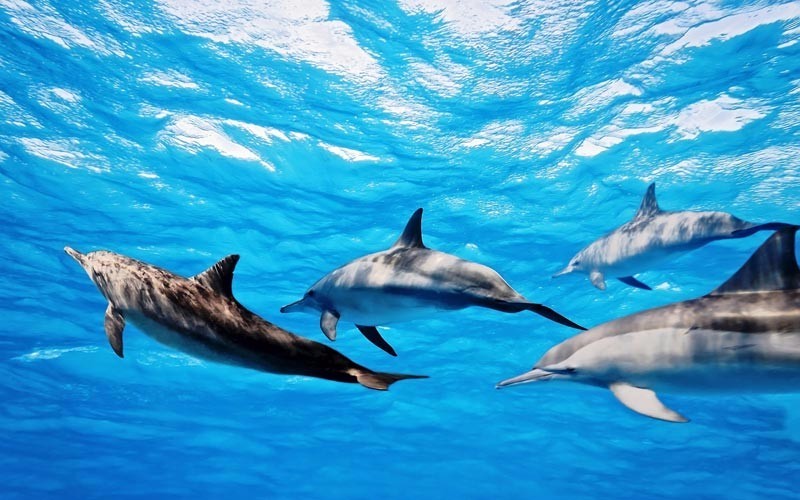
Few wildlife encounters are as exciting as seeing dolphins in their natural environment. Watching a group of dolphins surface beside a boat, swim through the clear water, or move together across the Red Sea can become one of the most memorable moments of an Egyptian holiday.
For travelers staying in Hurghada, dolphin-watching excursions offer an opportunity to experience marine wildlife beyond the beach and hotel pool. The Red Sea is home to several dolphin species and a diverse marine ecosystem that includes colorful reef fish, sea turtles, rays, coral formations, and many other fascinating creatures.
However, a responsible dolphin-watching trip in the Red Sea is about more than finding dolphins. It is about observing wild animals without disturbing their natural behavior.
That distinction is important.
A dolphin in the open sea is not performing for visitors. It is living in its own environment, following natural routines, traveling with its group, searching for food, resting, and interacting with other dolphins.
For this reason, the best dolphin excursions combine adventure with respect for marine life.
Travelers looking for excursions in Egypt can explore different Red Sea experiences through providers such as Best Tours Hurghada, while choosing an itinerary that matches their interests, comfort level, and expectations.
Why Dolphin Watching Is So Popular in the Red Sea
The Red Sea is famous for its exceptionally clear water, coral reefs, tropical fish, and diverse marine ecosystem.
For many visitors, dolphins add another level of excitement.
Unlike seeing marine animals in an aquarium or zoo, encountering dolphins in the open sea is unpredictable. You may see them from a distance, watch them swim alongside the boat, or perhaps observe them for several minutes.
Every encounter is different.
That uncertainty is actually part of the appeal.
You are not watching a scheduled performance. You are witnessing wildlife behaving naturally.
Hurghada is one of the most popular starting points for marine excursions in the Red Sea. Its location provides access to several areas where dolphins may be encountered.
However, no responsible operator should promise a guaranteed dolphin sighting.
Wild animals choose where they go.
Weather, sea conditions, food availability, season, boat traffic, and many other factors can influence whether dolphins appear during a particular excursion.
What Happens During a Dolphin-Watching Trip?
A typical dolphin-watching excursion from Hurghada may involve several stages.
The exact itinerary depends on the tour provider and sea conditions, but many trips follow a similar structure.
1. Hotel Pickup
Some excursions include transportation from the hotel to the marina.
Pickup times depend on the hotel location and departure schedule.
Travelers should be ready before the agreed pickup time to avoid delays.
2. Arrival at the Marina
After reaching the marina, passengers board the boat.
The crew may explain the day’s itinerary and provide basic safety instructions.
3. Sailing into the Red Sea
The boat leaves the harbor and heads toward marine areas where dolphins may be encountered.
This part of the trip is already an experience in itself.
From the deck, passengers can enjoy views of the Hurghada coastline and the open sea.
4. Searching for Dolphins
The crew watches the water and looks for signs of dolphin activity.
Passengers may also be encouraged to keep an eye on the horizon.
A dorsal fin breaking the surface can appear unexpectedly.
5. Wildlife Observation
If dolphins are found, the boat should slow down and maintain an appropriate distance.
The goal is to observe rather than chase.
Depending on the conditions, dolphins may remain visible for only a short time or may stay in the area longer.
6. Snorkeling or Swimming
Some dolphin excursions include snorkeling stops at reef locations.
These stops are separate from dolphin observation and may allow travelers to explore the underwater environment.
Whether swimming near dolphins is permitted depends on local rules, the location, the operator, and the behavior of the animals.
7. Return to Hurghada
After the planned activities, the boat returns to the marina.
What Dolphins Can Travelers See?
The Red Sea is home to several dolphin species.
Among the species that may be encountered are:
- Spinner dolphins
- Bottlenose dolphins
- Common dolphins in some areas
- Indo-Pacific bottlenose dolphins
The exact species encountered depends on the location.
Dolphins can be identified by their size, body shape, coloration, and behavior, although identifying a species from a moving boat can be difficult for inexperienced observers.
A knowledgeable guide can make the experience more educational by explaining what travelers are seeing.
Where Can Dolphins Be Seen Around Hurghada?
Several marine areas around the Red Sea are associated with dolphin sightings.
One well-known type of location is an offshore reef or reef system where dolphins may rest, travel, or feed.
Some excursions from Hurghada visit areas commonly associated with dolphin activity.
However, travelers should understand an important point:
A place known for dolphins does not mean dolphins will definitely be there on the day of your excursion.
This is wildlife, not a scheduled attraction.
A responsible operator should explain this clearly instead of guaranteeing an encounter.
Dolphin House and Other Marine Areas
Dolphin House is a popular name used for marine areas in the Red Sea associated with dolphin sightings.
Travelers may encounter dolphins in open water and then have opportunities for snorkeling around nearby reefs.
The appeal of these excursions is that the day is not necessarily dependent on dolphins alone.
Even if dolphins are not encountered, the Red Sea itself offers plenty to see.
Coral reefs, colorful fish, clear water, and underwater landscapes can make the trip worthwhile.
What Other Marine Life Might You See?
Dolphins are often the headline attraction, but they are not the only animals worth watching.
The Red Sea contains a remarkable variety of marine life.
Colorful Reef Fish
Snorkeling areas can contain large numbers of colorful fish.
Depending on the reef, travelers may encounter:
- Butterflyfish
- Angelfish
- Parrotfish
- Surgeonfish
- Damselfish
- Clownfish and anemone-associated fish
- Groupers
The exact species vary from location to location.
Sea Turtles
Sea turtles may sometimes be seen in suitable habitats.
They are generally best observed from a respectful distance.
If a turtle is swimming nearby, avoid attempting to touch or chase it.
Rays
Different types of rays can sometimes be found near sandy areas or reefs.
Their graceful movement makes them particularly interesting to watch while snorkeling.
Moray Eels
Moray eels often hide among rocks and coral formations.
They can be fascinating to observe but should never be approached or touched.
Coral Reefs
Although coral is not an animal that travelers usually think about when planning a wildlife trip, it is one of the most important parts of the Red Sea ecosystem.
The reef provides habitat and shelter for many marine species.
Why Wild Dolphin Encounters Are Different
There is a major difference between seeing a dolphin in the ocean and seeing one in a captive setting.
In a controlled animal attraction, dolphins may perform behaviors according to a schedule.
The environment is controlled.
Food may be provided.
Visitors know where the animals will be.
A wild dolphin is different.
It decides where to swim.
It chooses whether to approach a boat.
It decides when to leave.
It follows its natural social and feeding behaviors.
This makes a wild encounter much less predictable – but also much more meaningful.
A dolphin swimming freely through the Red Sea is not there to entertain tourists.
It is simply living its life.
That is precisely why travelers should treat the experience as wildlife observation rather than a guaranteed interaction.
Responsible Dolphin Watching: The Golden Rule
The most important rule is simple:
Observe, don’t chase.
If dolphins approach the boat, passengers should remain calm and allow them to decide whether they want to stay nearby.
The boat should not aggressively pursue dolphins.
It should also avoid cutting across their path or repeatedly changing direction to maintain close contact.
If dolphins disappear, the correct response is to continue the excursion rather than chase them.
This principle protects the animals and creates a more ethical tourism experience.
Should You Swim With Wild Dolphins?
This is one of the most common questions travelers ask.
The answer depends on local rules, the specific area, the operator, and the behavior of the dolphins.
Even when entering the water is permitted, travelers should never assume that dolphins want to interact with humans.
Swimming directly toward a dolphin can cause stress.
Trying to touch a dolphin is inappropriate.
Blocking its movement is also a problem.
If a responsible guide permits swimming in an area where dolphins are present, travelers should follow the guide’s instructions and maintain distance.
The safest approach is to let the animal control the interaction.
How Should Travelers Behave Around Dolphins?
Good wildlife tourism depends on simple behavior.
Keep Your Distance
Do not attempt to get as close as possible.
A good photograph is not worth disturbing an animal.
Do Not Touch
Wild dolphins should never be touched.
Do Not Feed Them
Feeding can alter natural behavior and create dependency or conflict.
Do Not Chase Them
If dolphins swim away, allow them to go.
Avoid Loud Noises
Sudden shouting or unnecessary noise can disturb marine animals.
Follow the Guide
The guide is responsible for helping the group behave appropriately.
Keep the Water Clean
Never throw plastic, food, or other waste into the sea.
Why Chasing Dolphins Can Be Harmful
Dolphins are intelligent and highly social marine mammals.
They need to travel, feed, rest, and communicate.
Repeated boat approaches can interfere with these activities.
If several boats pursue the same pod, the disturbance becomes even greater.
Responsible tourism therefore requires more than individual good intentions.
It requires operators and travelers to recognize that wildlife has priority over entertainment.
The best excursion is not necessarily the one that gets closest to the animals.
It is the one that allows visitors to observe them while minimizing disturbance.
Choosing a Responsible Dolphin-Watching Tour
Not every excursion is organized in exactly the same way.
Before booking, ask several questions.
Does the tour explain wildlife guidelines?
A responsible provider should be willing to explain how guests should behave around dolphins.
Does the operator guarantee a dolphin sighting?
A guaranteed wildlife sighting should raise questions.
No one can control wild animals.
How large is the group?
Smaller groups may provide a more relaxed experience and make it easier for guides to manage guest behavior.
What happens if dolphins are not found?
A good itinerary should still offer a meaningful day at sea.
For example, snorkeling at coral reefs can provide an excellent alternative.
Are there additional activities?
Some tours combine dolphin observation with:
- Snorkeling
- Swimming
- Reef exploration
- Lunch
- Drinks
- Island visits
Always check what is actually included.
Dolphin Watching vs. Captive Dolphin Experiences
Travelers sometimes have to choose between seeing dolphins in the wild and participating in a captive-animal attraction.
These are fundamentally different experiences.
| Wild Dolphin Watching | Captive Dolphin Experience |
|---|---|
| Animals live in the sea | Animals live in a controlled environment |
| Sightings are unpredictable | Encounters are scheduled |
| No guaranteed interaction | Interaction may be structured |
| Natural behavior can be observed | Behaviors may be trained |
| Wildlife-focused experience | Entertainment may be a central component |
| Requires patience | Usually more predictable |
For travelers interested in nature and conservation, wild dolphin watching can provide a more meaningful connection with the marine environment.
The Educational Side of Dolphin Watching
A dolphin-watching trip can be more than a photo opportunity.
It can also teach travelers about marine ecosystems.
A good guide may explain:
- Dolphin behavior
- Social structures
- Feeding patterns
- Reef ecosystems
- Marine conservation
- Other Red Sea species
- Responsible tourism
For children, this can be particularly valuable.
Seeing an animal in the wild can create a stronger connection to environmental protection than simply reading about it.
Dolphin Watching with Children
Families often wonder whether dolphin excursions are suitable for children.
They can be, provided that the itinerary and boat are appropriate.
Parents should consider:
- Boat duration
- Sea conditions
- Child’s comfort around water
- Availability of life jackets
- Shade on the boat
- Toilet facilities
- Meal arrangements
- Transfer duration
Children should also be taught basic wildlife rules before the trip.
For example:
We watch dolphins. We don’t chase them.
This simple rule can help children understand that wildlife is not there for human entertainment.
What Should You Pack?
A dolphin-watching excursion usually requires only a few essentials.
Sunscreen
The sun can be strong on the open sea.
Sunglasses
Useful for glare from the water.
Hat
Provides additional sun protection.
Swimwear
Recommended if snorkeling or swimming is included.
Towel
Useful after water activities.
Waterproof Bag
Protects phones, cameras, passports, and other valuables.
Water
Hydration is important, particularly in hot weather.
Motion-Sickness Preparation
If you are prone to seasickness, plan ahead and speak with a healthcare professional or pharmacist about suitable options before traveling.
What Should You Wear?
Lightweight, comfortable clothing is generally appropriate.
For a full-day excursion, consider wearing:
- Lightweight trousers or shorts
- T-shirt
- Swimwear
- Comfortable sandals
- Sun protection
A light cover-up can be useful after swimming.
Remember that the boat may feel cooler when moving, especially if there is strong wind.
The Best Time of Day for Dolphin Watching
There is no universal guarantee that dolphins are easier to find at one particular time.
Marine animals follow natural patterns that can vary.
Some excursions leave early in the morning because sea conditions may be calmer and because the itinerary requires enough time to reach offshore locations.
However, the most important factor is not simply the departure hour.
Sea conditions, wildlife movement, location, and weather all matter.
Your excursion provider should provide the specific departure time and itinerary.
Weather and Sea Conditions Matter
The Red Sea can appear calm from the beach while conditions farther offshore are different.
Wind and waves can affect both comfort and visibility.
If conditions are unsuitable, a responsible operator may modify the itinerary.
This is an important sign of good practice.
Safety should always come before the promise of a particular experience.
What Happens If You Don’t See Dolphins?
This is a question every traveler should ask before booking.
The answer is simple:
You are visiting wildlife, not a theme park.
There is no guarantee.
But that does not mean the excursion has failed.
The Red Sea offers plenty of other experiences.
You may still enjoy:
- Coral reefs
- Tropical fish
- Sea turtles
- Rays
- Swimming
- Snorkeling
- Beautiful coastal views
- Time on the boat
- Sunrise or sunset scenery
A good tour should have enough variety to make the day worthwhile even without a dolphin encounter.
Why Hurghada Is a Great Starting Point
Hurghada is one of Egypt’s major Red Sea tourism destinations.
Its location makes it convenient for travelers who want to combine marine excursions with other activities.
You can spend one day exploring the sea and another exploring the desert or historical attractions.
Popular experiences from Hurghada include:
- Dolphin watching
- Snorkeling
- Diving
- Island trips
- Glass-bottom boat tours
- Semi-submarine excursions
- Parasailing
- Desert safaris
- Luxor day trips
- Cairo excursions
This variety allows visitors to create a balanced itinerary.
Travelers interested in dolphin excursions can explore options through Best Tours Hurghada, alongside other Egypt excursions.
How to Make Your Dolphin-Watching Trip More Enjoyable
The best mindset is to treat the excursion as a day of exploration rather than a hunt for a photograph.
Instead of asking:
“How close can I get to the dolphins?”
ask:
“What can I learn from watching them?”
This small change in perspective can make the experience more rewarding.
Bring a camera, but don’t spend the entire trip looking through a screen.
Watch the water.
Listen to the guide.
Look at the reef.
Observe how the dolphins move.
Sometimes the most memorable moment is the few seconds when a dolphin suddenly appears beside the boat.
Responsible Tourism Beyond Dolphins
Marine conservation does not stop with dolphins.
The Red Sea ecosystem depends on healthy coral reefs and clean water.
Travelers can contribute by following simple principles:
- Never throw rubbish into the sea.
- Avoid single-use plastics when possible.
- Do not touch coral.
- Do not stand on reefs.
- Do not collect shells or marine organisms.
- Never feed wild animals.
- Avoid purchasing coral or marine-life souvenirs.
- Follow local environmental regulations.
Small choices made by thousands of visitors can have a meaningful impact.
Frequently Asked Questions About Dolphin Watching in the Red Sea
Can I see dolphins in the Red Sea?
Yes. Dolphins live in parts of the Red Sea and can sometimes be encountered during marine excursions from Hurghada and other coastal destinations.
However, sightings are never guaranteed.
What types of dolphins live in the Red Sea?
Several species can occur in the region, including spinner dolphins and bottlenose dolphins. The species you encounter depends on the location and circumstances.
Can I swim with wild dolphins?
This depends on local rules, the specific location, operator practices, and dolphin behavior. Even when swimming is allowed, travelers should never chase, touch, feed, or block dolphins.
Is dolphin watching suitable for children?
Many families enjoy these excursions. Parents should select an age-appropriate boat and check the itinerary, safety equipment, duration, and sea conditions.
What happens if dolphins do not appear?
A responsible excursion should continue with other activities such as snorkeling, reef observation, swimming, or sightseeing.
Are wild dolphins better than captive dolphins?
They provide a fundamentally different experience. Wild dolphins can be observed behaving naturally, while captive experiences take place in controlled environments.
How close can a boat get to dolphins?
This depends on local regulations and responsible wildlife-watching practices. The priority should always be maintaining a respectful distance and avoiding disturbance.
Can I touch a wild dolphin?
No. Travelers should not attempt to touch wild dolphins.
Can I feed dolphins?
No. Feeding wild dolphins can alter their natural behavior and should be avoided.
Should I bring a camera?
Yes, but remember that the experience is more important than getting the perfect photograph. A waterproof case can help protect your equipment.
Is snorkeling included in dolphin-watching tours?
Some excursions include snorkeling stops, but not all do. Check the itinerary before booking.
Where can I book a dolphin-watching trip in Hurghada?
Travelers can compare local excursion providers and check the exact itinerary, inclusions, pickup arrangements, and wildlife practices. Best Tours Hurghada offers excursions in Egypt and can be considered when planning Red Sea activities from Hurghada.
Final Thoughts: Let the Dolphins Choose the Encounter
Dolphin watching in the Red Sea can be an extraordinary travel experience.
But the most important lesson is simple:
Wildlife should never be treated like a scheduled performance.
A dolphin may appear beside your boat for a few seconds or remain visible for much longer. It may swim away immediately or never appear at all.
That uncertainty is part of what makes the experience special.
The Red Sea offers much more than dolphins. Its coral reefs, colorful fish, turtles, rays, islands, and clear blue water create a complete marine ecosystem worth exploring.
By choosing a responsible excursion, following wildlife guidelines, and respecting the animals’ space, travelers can enjoy an unforgettable encounter while helping protect the environment.
If you are planning a trip to Hurghada, consider adding a dolphin-watching excursion to your itinerary.
Explore the Red Sea with Best Tours Hurghada, discover its marine landscapes, and experience wildlife where it truly belongs – in the open sea.
Ready to Discover Dolphins in the Wild?
Turn your Hurghada holiday into a genuine marine adventure.
Choose a dolphin-watching excursion that prioritizes safety, responsible wildlife observation, and respect for the Red Sea ecosystem. Whether you are traveling as a couple, with friends, or with your family, a day on the Red Sea can become one of the most memorable parts of your Egyptian vacation.
Book your Red Sea adventure with Best Tours Hurghada and discover the beauty of Egypt’s marine world – responsibly, respectfully, and with an open mind.